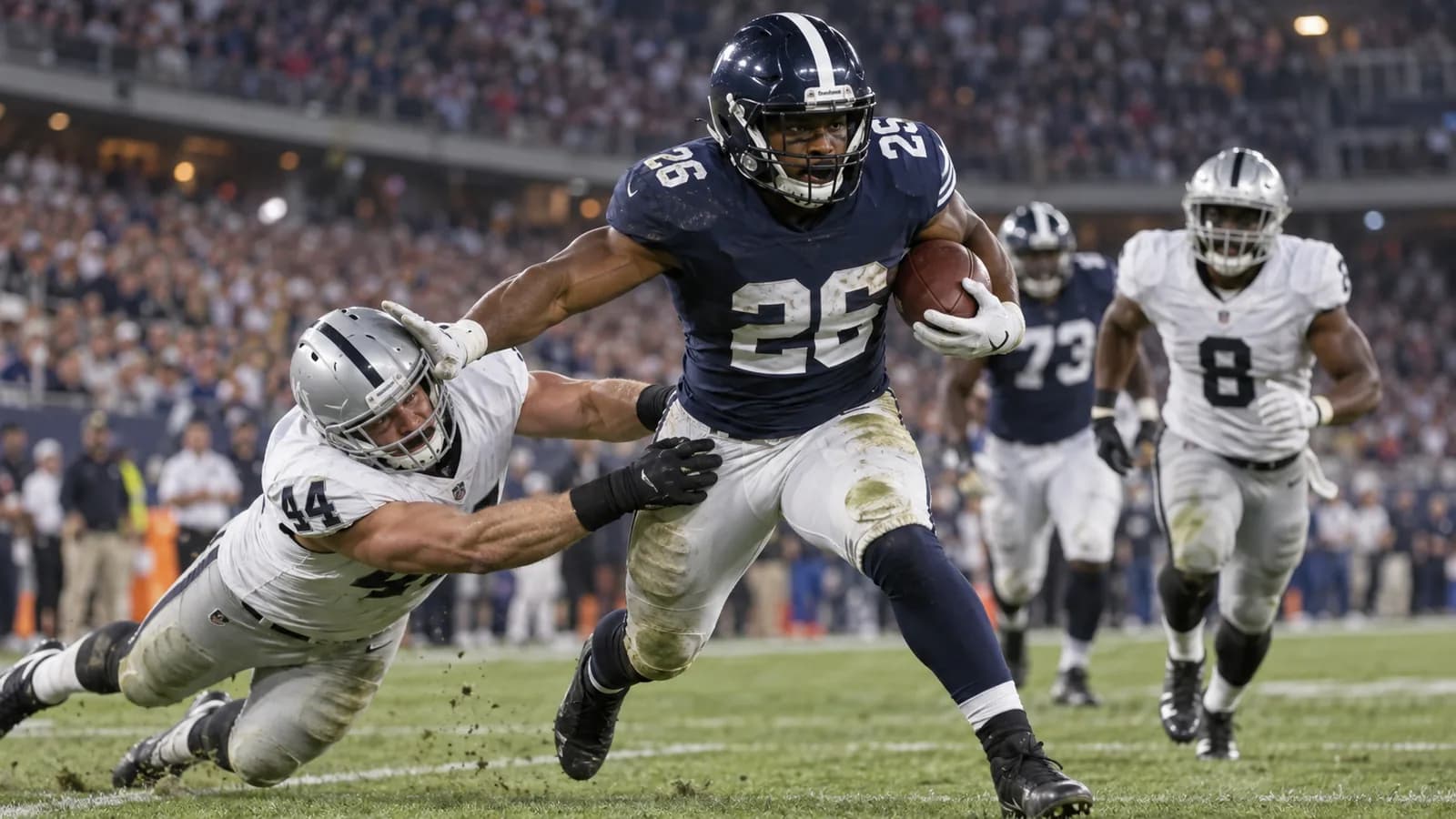
American Football Conference (NFL)
Teams, divisions, champions and how the playoff path runs through the AFC
- Partner listings
- Seller shown
- Compare prices
- Delivery details
About the AFC
The American Football Conference, universally known as the AFC, is one of the two halves that make up the National Football League. Sixteen franchises spread across four divisions compete every autumn for the Lamar Hunt Trophy, the prize awarded to the conference champion who earns the right to represent the AFC in the Super Bowl. For fans planning their season, the AFC is the side of the bracket that produced the Patriots dynasty of the 2000s, the Steelers' Steel Curtain teams, the Broncos under John Elway and Peyton Manning, and the current Chiefs run built around Patrick Mahomes. Following the conference means tracking sixteen ticket markets that move on their own clocks, driven by quarterback play, division races, and playoff seeding. Some AFC venues sell through quickly on schedule release, while others build heat as a team's record improves through October and November. Buyers who understand the conference structure can identify which weekends will be expensive, which divisional trips are travel-friendly, and which home games carry the most playoff weight. This hub gathers everything a planner needs in one place: how the four divisions are organized, which teams sit in which markets, how the standings and tiebreakers feed into the postseason, and how the AFC Championship Game functions as the gateway to the Super Bowl. Each franchise also has a dedicated team hub on this site where individual home schedules, venue details, and live ticket availability are kept current. Whether the goal is a single bucket-list game, a season of home dates for a hometown club, or a divisional road trip, the AFC offers sixteen distinct ways into the NFL season, and this page is the planning starting point.
History & structure
The American Football Conference traces its modern shape to the 1970 AFL–NFL merger, when the ten franchises of the American Football League combined with three established NFL clubs to form a new conference inside a unified league. That founding mix is why the AFC carries a slightly different identity than its NFC counterpart, with deep roots in pro football's challenger era and a tradition of innovation at the quarterback position. The conference has been organized into four geographic divisions, East, North, South, and West, since the 2002 realignment that added the Houston Texans as the league's thirty-second franchise. Each division contains four teams, producing a clean sixteen-team conference that mirrors the NFC on the other side of the bracket. The trophy awarded to the AFC champion is named for Lamar Hunt, the Kansas City Chiefs founder who was instrumental in creating the AFL and shepherding the merger. That history is felt every January when the winning locker room lifts a trophy bearing the name of one of pro football's foundational figures. Structurally, the conference operates as a self-contained competition for most of the regular season. Teams play their three division rivals twice each, rotate through one other AFC division and one NFC division on a set cycle, and finish with two games tied to prior-year standings. The result is a schedule heavy on intra-conference matchups, which is why AFC standings tend to be decided by how teams perform against their own side of the league. From a fan and ticketing perspective, this structure means the conference functions almost like its own league for two-thirds of the season. Divisional games carry outsized weight, conference road trips dominate the calendar, and only a handful of crossover dates against the NFC interrupt the rhythm. For buyers planning months ahead, understanding the AFC's structure is the first step toward identifying which games will matter most when January arrives.
Divisions
The AFC East is the conference's northeastern corridor, anchored by the Buffalo Bills, Miami Dolphins, New England Patriots, and New York Jets. It is a division defined by extreme weather contrasts, from lake-effect snow in Buffalo and chill in Foxborough to South Florida sun in Miami, and by a recent power shift in which the Bills have established themselves as the team to beat after two decades of Patriots dominance. Ticket markets here are mature and competitive, with Bills home games among the most coveted in the conference and Jets and Dolphins schedules often spiking around marquee opponents. The AFC North brings together the Baltimore Ravens, Cincinnati Bengals, Cleveland Browns, and Pittsburgh Steelers in what is widely considered the most physical division in football. Every matchup between these four is a rivalry game, and the proximity of the cities makes road travel realistic for serious fans. The North consistently produces playoff teams and quarterback drama, and its home venues, particularly in Pittsburgh and Baltimore, carry deep football heritage that drives steady demand. The AFC South covers the Houston Texans, Indianapolis Colts, Jacksonville Jaguars, and Tennessee Titans, a division that has cycled through eras of dominance and rebuilds. It is geographically the most spread out of the AFC's four divisions, stretching from Texas to Florida to Tennessee, and home ticket demand tracks closely with quarterback success and division-race relevance. When the South is competitive, all four markets heat up at once. The AFC West has long been the conference's glamour division, featuring the Denver Broncos, Kansas City Chiefs, Las Vegas Raiders, and Los Angeles Chargers. The current Chiefs run has made Kansas City the most consistent ticket on the conference calendar, while the Raiders' move to Las Vegas and the Chargers sharing a Los Angeles venue have transformed the West's commercial profile. Broncos home games at altitude in Denver remain a bucket-list experience for many traveling fans, and division weekends across the West routinely rank among the conference's most expensive and most atmospheric dates.
Format & playoff qualification
The AFC operates inside the NFL's seventeen-game regular-season schedule, with each team playing six divisional games, four games against another AFC division on a rotation, four against an NFC division on a rotation, and three more matchups tied to prior-year standings. The result is a slate weighted heavily toward intra-conference play, which means AFC standings are largely shaped by how teams perform against the other fifteen clubs on their side of the league. Seven of the conference's sixteen teams reach the playoffs each January. The four division winners qualify automatically and are seeded one through four based on record. Three additional wild-card spots go to the next-best teams in the conference regardless of division, seeded five through seven. The number one seed earns a first-round bye and home-field advantage throughout the AFC playoffs, a prize that often comes down to head-to-head results and division-game performance. Tiebreakers follow a defined order when teams finish with identical records. Head-to-head record comes first, followed by division record, then record against common opponents, then conference record, with strength of victory and other metrics serving as later tiebreakers. For ticket planners, these rules matter because they determine which late-season games carry playoff stakes. A team locked into a seed by mid-December may rest starters, while a team fighting for a wild-card spot will sell out its final home dates at premium levels. Understanding the format also helps explain why divisional games in December are consistently the most expensive on the conference calendar. They directly decide playoff seeding, host rights, and in many years which team gets to skip the wild-card round entirely. Buyers who track standings as the season progresses can often anticipate where prices will move next.
Champions and dynasties
Recent AFC history has been defined by a small number of dominant programs separated by transitional eras. The New England Patriots of the early 2000s through the late 2010s set the modern standard, with Tom Brady and Bill Belichick guiding the franchise to a long run of conference titles and Super Bowl appearances that reshaped how teams approached roster building and quarterback development. Their stretch of AFC East dominance also recalibrated ticket markets across the entire conference, as fans planned years in advance to see the Patriots on the road. The current era belongs to the Kansas City Chiefs, who under Patrick Mahomes and Andy Reid have established themselves as the conference's premier program. Chiefs home games at Arrowhead Stadium have become among the toughest tickets in American sports, and their deep playoff runs have made the AFC West the conference's most-watched division on a weekly basis. Their consistency has also raised the ceiling on what visiting fans expect to pay for road tickets across AFC venues. Other recent and historical champions trace a rich conference lineage. The Pittsburgh Steelers own a record-tying six Super Bowl titles, anchored by the Steel Curtain era of the 1970s and the Ben Roethlisberger years of the 2000s and 2010s. The Denver Broncos delivered title teams under John Elway in the late 1990s and under Peyton Manning in the mid-2010s. The Baltimore Ravens have produced two Super Bowl winners in the modern era, and the Indianapolis Colts, Cincinnati Bengals, Buffalo Bills, and Miami Dolphins each carry significant playoff histories of their own. For fans, this history matters because championship-level franchises tend to anchor the most expensive home schedules, and ticket markets often respond quickly to signs that a new contender is emerging. Each team hub on this site tracks the current home slate so planners can move when momentum shifts.
Biggest rivalries
AFC rivalries are among the most storied in American sports, and many of them reshape ticket markets every time they appear on the schedule. The Steelers and Ravens have produced a generation of bruising AFC North games, often deciding the division and frequently spilling into the playoffs, and tickets for that matchup sell at a premium in both Pittsburgh and Baltimore regardless of records. The Browns and Bengals add weight to the same division, and any North weekend with two of these teams playing each other tends to draw national attention. In the AFC East, the Patriots and Bills carry decades of competitive history, and the modern Buffalo era has reignited that rivalry with playoff stakes attached most years. Jets and Patriots games retain their own edge from earlier eras, while Dolphins and Bills dates have grown into a marquee matchup as both franchises have become contenders. Each of these games tends to drive secondary-market spikes weeks before kickoff. The AFC West is rivalry-rich top to bottom. Chiefs and Raiders is one of the league's oldest blood feuds, dating to the AFL years and carrying through the Raiders' moves from Oakland to Los Angeles to Las Vegas. Chiefs and Broncos has produced multiple eras of quarterback duels, and Chargers games against any of the three other West teams routinely sell out in Los Angeles. The AFC South has its own internal rivalries, particularly Colts and Titans, a pairing rooted in playoff history and frequent late-season relevance. Texans and Jaguars matchups have grown in importance as both franchises emerge from rebuilds. For ticket buyers, the practical takeaway is that any divisional game in the AFC carries a premium, but rivalry weekends consistently sit at the very top of the price curve.
Cities & venues
AFC cities span the full geographic and cultural range of American football. In the East, the conference reaches from Buffalo's lake-effect winters at Highmark Stadium, to Foxborough outside Boston where the Patriots play, to MetLife Stadium in the New Jersey Meadowlands where the Jets host their home games, and down to Hard Rock Stadium in the Miami suburbs. Each market offers a distinct travel experience, with Buffalo and New England known for cold-weather atmosphere and Miami offering a destination-game feel through the early season. The AFC North is a tight cluster of Rust Belt and mid-Atlantic cities. Pittsburgh's Acrisure Stadium sits at the confluence of the city's rivers, Cleveland's lakefront stadium offers some of the loudest crowds in the league, Baltimore's M&T Bank Stadium anchors the city's downtown sports district near Camden Yards, and Cincinnati's Paycor Stadium sits along the Ohio River. The proximity of these four cities makes the North the conference's most road-trip-friendly division. The AFC South is more spread out, covering NRG Stadium in Houston, Lucas Oil Stadium in downtown Indianapolis, EverBank Stadium in Jacksonville, and Nissan Stadium in Nashville. Each offers a distinct regional experience, from Houston's massive indoor venue to Nashville's growing reputation as a weekend destination for traveling fans. The AFC West stretches across the western United States, with Empower Field at Mile High in Denver, Arrowhead Stadium in Kansas City, Allegiant Stadium on the Las Vegas Strip, and SoFi Stadium in the Los Angeles area shared with the Rams. Las Vegas and Los Angeles have become destination markets in their own right, and Kansas City and Denver remain among the most atmospheric NFL environments. Each city has a dedicated venue and team hub on this site with current home schedules and ticket information.
Tickets — how the conference shapes pricing
For ticket buyers, the AFC's structure creates predictable patterns worth planning around. Divisional games are the most expensive dates on any team's home schedule, because they happen twice per season per opponent and carry the most direct playoff implications. A Bills home game against the Patriots, a Steelers home game against the Ravens, or a Chiefs home game against the Raiders will consistently sit at the top of the price curve, often regardless of records. Buyers who want these games should plan early, ideally around the schedule release in the spring. Crossover games against marquee NFC opponents are another premium category. AFC home dates against teams like the Cowboys, Eagles, or 49ers happen only once every several years on a rotation, which creates artificial scarcity and pushes prices higher than a typical non-division matchup. These are the games where season-ticket holders are least likely to release seats, so secondary supply tends to be thinner. Season timing also matters significantly. Early-season AFC home games in warm-weather markets like Miami, Jacksonville, and Las Vegas can be relative value plays for travelers, while late-season games in Buffalo, Cleveland, Denver, and Kansas City carry weather premiums alongside playoff stakes. December divisional matchups are routinely the conference's most expensive non-playoff games of the year. Each AFC franchise has a dedicated team hub on this site where the current home schedule is kept up to date, with links through to live ticket availability for individual games. Conference-wide context also helps. When a team is fighting for a division title or wild-card spot, every remaining home date will move in price, and tracking AFC standings through the fall is one of the most reliable ways to anticipate where ticket markets are heading next.
Conference playoffs / championship round
The AFC playoffs follow the same seven-team format used across the NFL. The four division winners earn the top four seeds, with the best record claiming the number one seed and a first-round bye. The next three best teams in the conference, regardless of division, fill the wild-card spots as the fifth, sixth, and seventh seeds. Only the top seed skips the opening weekend, which has made the race for that bye one of the most consequential storylines of the late regular season. Wild-Card Weekend features three AFC games, with the two seed hosting the seven, the three hosting the six, and the four hosting the five. All games are played at the higher seed's home venue, which makes late-season home-field positioning a major driver of ticket markets across the conference. The Divisional Round then sends the top seed into the bracket against the lowest remaining seed, with the other two AFC winners facing off on the same weekend. The AFC Championship Game is the conference's signature event. The two surviving teams meet at the higher seed's home stadium, with the winner receiving the Lamar Hunt Trophy and the right to represent the AFC in the Super Bowl. It is one of the most expensive tickets in American sports, and prices typically settle only in the final days before kickoff as buyers and sellers react to matchups. Conference championship hosting is a prize that influences planning months in advance, and teams positioned for the one or two seed often see late-season home ticket markets surge as fans buy in anticipation. For planners chasing the AFC title game itself, the most reliable approach is to track standings through December and identify likely host cities before the bracket finalizes.
Storylines to watch
Every AFC season builds around a small number of recurring storylines worth tracking for ticket and travel planning. The Chiefs' run as the conference's standard-bearer is the central question each year, with every challenger measured against Kansas City and every Chiefs road game treated as a marquee date by the home market. The AFC North's annual physical race typically comes down to the final weeks, and the division's home schedules tend to gain value as November turns to December. Quarterback storylines drive much of the rest of the conference. The Bills' window with Josh Allen, the Bengals' ceiling with Joe Burrow, and the development of younger starters around the league all shape which teams emerge as contenders and which home markets heat up midseason. Coaching changes, breakout defenses, and trade-deadline moves also reshape the conference picture year to year. For fans, the practical move is to revisit team hubs on this site through the season, where home schedules and current ticket availability stay updated as the AFC race develops.
Help center
AFC tickets — frequently asked questions
Contact our team for help using the site. For an existing order, the seller shown at checkout handles payment, delivery, and order support.
Contact supportWhy buy here
Ticket partner offers
Listings identify the partner or seller that provides the offer and handles the purchase.
Seller protection terms
Buyer protection and refund terms depend on the selected seller; review them before checkout.
Venue maps where available
Interactive seating geometry is shown when matching venue data is available for the event.
Delivery details by offer
The selected seller provides the delivery method and timing for each listing.
Partner-fed prices
Displayed prices come from ticket partner inventory and refresh on each feed's update schedule.
Help with listings
Contact AllSportsTicket about a site listing; the marketplace seller handles orders, delivery and refunds.