American League (MLB)
Teams, divisions, champions and how the playoff path runs through the American League
- Partner listings
- Seller shown
- Compare prices
- Delivery details
About the American League
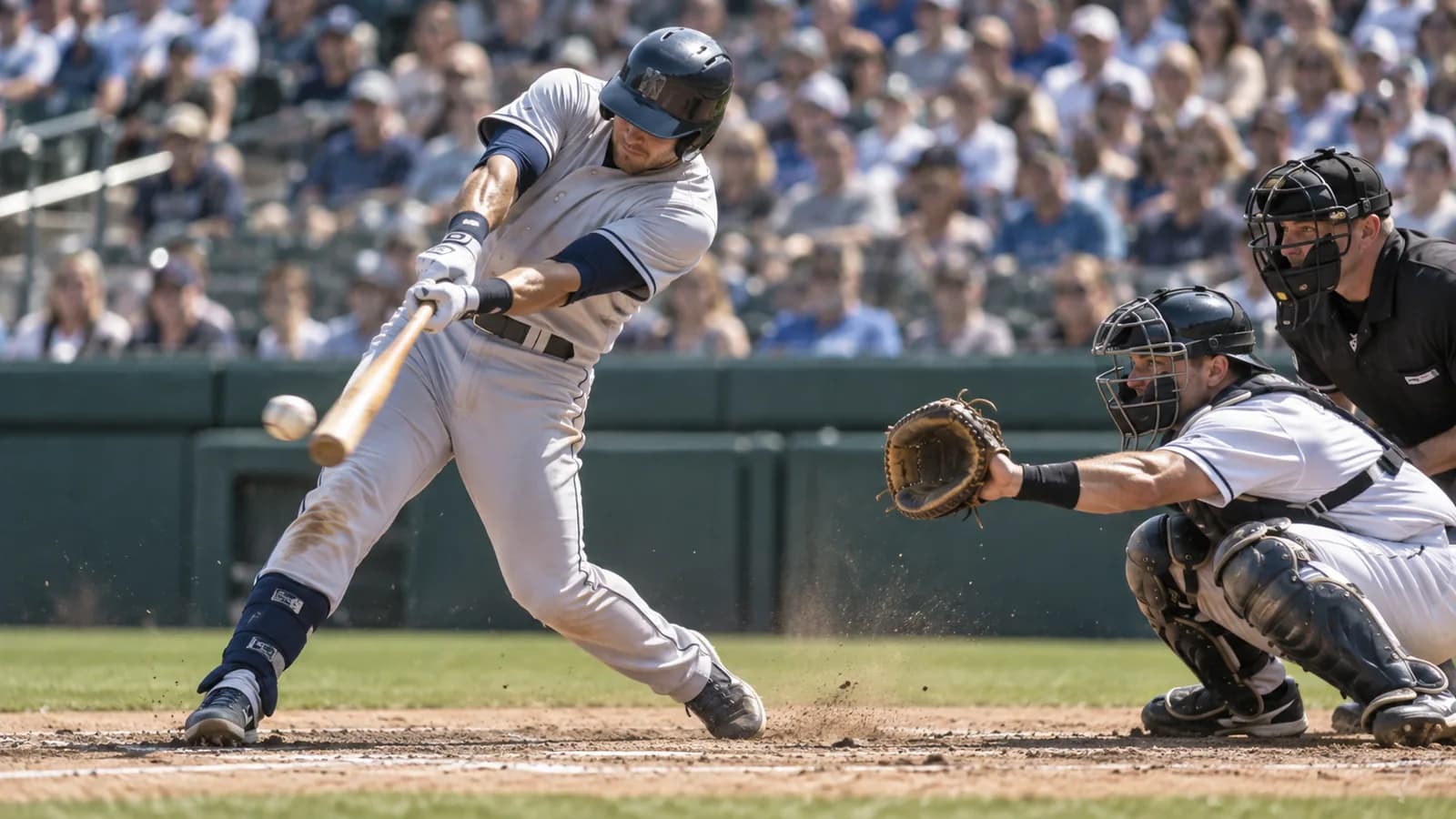
The American League is one of the two major circuits that make up Major League Baseball, comprising fifteen franchises spread across three geographic divisions: the AL East, AL Central, and AL West. Together with the National League, the AL forms the highest level of professional baseball in North America, with a regular season schedule running from late March or early April through the end of September. For more than a century, the league has produced some of the sport's most recognizable franchises, ballparks, and pennant races, and it remains a defining force in how fans plan their summer entertainment calendars. Whether you follow the Yankees from the Bronx, the Astros from Houston, or the Mariners from the Pacific Northwest, the AL offers a season-long narrative that builds toward the postseason and the World Series. Coverage on this site spans every AL franchise, with team hubs that connect fans to upcoming home and away dates, divisional matchups, and marquee interleague series. The AL matters because it shapes nearly half of the major league calendar, drives ticket demand in fifteen distinct metropolitan markets across the United States and Canada, and sets the framework for the postseason path that culminates in October. From historic rivalries that predate the modern game to expansion-era franchises building new traditions, the AL covers a remarkable range of baseball cultures. Fans planning a trip to a single ballpark, a multi-city baseball road trip, or a full season-ticket commitment will find that understanding the league's structure makes scheduling, travel logistics, and ticket strategy far more straightforward than treating each franchise in isolation.
History & structure
The American League traces its roots to the start of the twentieth century, when it was established as a rival major league and quickly earned parity with the older National League. The first modern World Series followed shortly after, pitting the two pennant winners against each other in a format that has endured, with adjustments, for more than a hundred years. Over the decades, the AL has expanded from its original eight charter franchises into a fifteen-team league that stretches from the Atlantic to the Pacific and includes one Canadian market. Structurally, the league is divided into three five-team divisions: the AL East along the eastern seaboard and Great Lakes, the AL Central across the Midwest, and the AL West covering Texas, the Mountain region, and the Pacific Coast. Each team plays a 162-game regular season schedule that mixes divisional games, intraleague matchups against the other AL divisions, and interleague series against National League opponents. The most significant rules distinction historically between the leagues was the designated hitter, introduced in the AL in the 1970s and adopted universally across MLB beginning with the 2022 season under the unified DH rule. That change ended a decades-long stylistic split between the leagues while preserving the AL's three-division structure and identity. The league office, along with MLB's central operations, oversees scheduling, officiating, and competitive integrity, while individual ownership groups run each franchise. Front offices invest heavily in scouting, analytics, and player development, and the league's collective bargaining framework with the players' association shapes everything from roster rules to postseason format. For fans, the AL functions as a coherent universe of fifteen teams whose paths cross constantly through the summer, building toward division titles, wild card berths, and ultimately the American League pennant that earns a place in the World Series.
Divisions
The American League is organized into three divisions of five teams each, and understanding that geography is the simplest way to read the standings and plan a season of ticket buying. The AL East is the league's most internationally recognized division, featuring the New York Yankees, Boston Red Sox, Toronto Blue Jays, Tampa Bay Rays, and Baltimore Orioles. It is a division defined by deep historical rivalries, large media markets, and consistently competitive front offices, and divisional games here regularly drive some of the highest demand on the AL calendar. The AL Central covers the industrial Midwest and Upper Midwest, with the Cleveland Guardians, Detroit Tigers, Minnesota Twins, Chicago White Sox, and Kansas City Royals. This division features classic American baseball cities, several of the league's most storied ballpark histories, and a tradition of pitching-led, fundamentals-first competition. It also tends to produce close, tightly bunched standings races, where head-to-head divisional series in August and September can swing the entire pennant picture. The AL West stretches from Houston and Arlington in Texas all the way to the Pacific Coast, including the Houston Astros, Texas Rangers, Seattle Mariners, Los Angeles Angels, and Athletics. It is the most geographically dispersed division in the league, requiring long travel schedules and producing distinctive late-night television windows for fans in the eastern half of the country. Each division sends one champion to the postseason automatically, and the divisional structure also governs schedule weighting, with teams playing more games against their four divisional rivals than against any other group of opponents. For ticket buyers, the practical implication is that home schedules cluster around divisional series, meaning the same opponents return to each ballpark multiple times per year. Team hubs on this site break out those divisional matchups for every AL franchise so fans can quickly find the dates that matter most to them, whether that means a high-profile rivalry weekend or a quieter midweek series with playoff implications.
Format & playoff qualification
The American League regular season runs 162 games per team, with the standings ordered by winning percentage within each of the three divisions. The three division winners qualify automatically for the postseason, and an additional three teams earn wild card berths based on the best remaining records in the league. Tiebreakers for division titles, wild card seeding, and postseason qualification are generally resolved by head-to-head record, intradivisional record, and other on-field criteria rather than by single-game playoffs, a change that streamlined the end of the regular season under the current format. Throughout the year, teams accumulate records that are tracked not only overall but also by division, against the league, against the National League, at home, on the road, and in one-run games. Those splits matter for both fan analysis and front office planning, and they are often visible on standings pages alongside games-behind columns for division and wild card races. The league's schedule is built to balance competitive fairness with travel logistics, mixing four-game and three-game series, getaway day day games, and traditional weekend home stands. Doubleheaders are uncommon but can be added due to weather. For fans planning attendance, the standings format means that even mid-summer series carry weight, because every game contributes to both the divisional race and the broader wild card picture. Late-season series between teams chasing the same wild card spot often become unofficial playoff previews, with rotations aligned and rosters fully engaged. Team hubs on this site list upcoming home dates in standings context, so fans can quickly identify the series most likely to feature meaningful playoff implications when they decide which game to attend.
Champions and dynasties
The American League has produced some of the most celebrated dynasties and defining eras in professional sports. The Yankees stand alone in terms of accumulated pennants and championships, having dominated multiple distinct eras across the twentieth century and remaining a consistent postseason presence in the modern era. The Red Sox, after decades of close calls, emerged in the early twenty-first century as a recurring contender that has lifted multiple trophies in the modern wild card era. Smaller-market AL franchises have also produced unforgettable runs: the Royals built a contact-and-bullpen formula that carried them to consecutive pennants in the mid-2010s, while the Astros became one of the defining teams of the late 2010s and early 2020s with sustained postseason appearances and pennant-winning depth. The Rays have repeatedly proven that disciplined player development and analytics can produce October baseball without top-of-market payrolls, reaching the World Series in the modern era as a model of organizational efficiency. The Rangers, Mariners, Guardians, Twins, Tigers, Blue Jays, White Sox, Orioles, Angels, and Athletics each carry their own championship lineage or recent contention windows, with the Orioles and Tigers both holding storied earlier dynasties and the Blue Jays representing the first non-US franchise to win the World Series. The Athletics, across multiple home cities, have one of the deepest championship histories in the league. More recently, the league has been shaped by analytically driven front offices, the rise of the universal DH, and the influence of two-way and power-hitting superstars who can reshape a franchise's competitive window in a single season. The current era is best described as competitive parity layered on top of a few perennial heavyweights, with the AL East and AL West typically producing the most postseason entrants and the AL Central frequently sending a surprise division champion. Team hubs on this site track each franchise's upcoming schedule against that historical backdrop.
Biggest rivalries
The American League is home to some of the most intense rivalries in North American sports, with matchups that draw national television windows and reliably move the ticket market. The Yankees and Red Sox remain the league's signature rivalry, a year-round storyline that intensifies whenever the two clubs meet in the Bronx or at Fenway Park and that has produced unforgettable regular season and postseason chapters. The Blue Jays, Rays, and Orioles all contribute to the AL East's reputation as the league's most consistently competitive division, with Toronto–New York and Tampa Bay–Boston matchups generating their own dedicated followings. In the AL Central, the Guardians and Twins have built a long-standing divisional rivalry shaped by repeated head-to-head pennant chases, while the White Sox–Tigers and Royals–Tigers matchups carry deep regional history rooted in Midwestern baseball culture. The AL West features the Astros and Rangers, whose intrastate rivalry has grown sharper as both clubs have pushed deep into the postseason in recent years. The Mariners and Astros, along with the Mariners and Angels, produce some of the league's most dramatic late-night Pacific Coast matchups, and the Athletics, regardless of home city, retain rivalries with their divisional opponents that stretch back decades. Interleague play also reignites geographic rivalries with NL clubs, but within the AL the divisional structure ensures that the most heated series are revisited many times per season. For ticket buyers, rivalry weekends are usually the highest-demand dates on any franchise's home calendar, and team hubs on this site flag those marquee series so fans can plan accordingly. Whether the appeal is historical significance, current standings stakes, or simply the atmosphere generated by a packed rivalry crowd, these matchups define much of what makes the AL season worth following.
Cities & venues
The American League covers a remarkable range of cities and venues, stretching from the Atlantic seaboard across the Midwest and down through Texas to the Pacific Coast. In the AL East, fans can attend games in New York City, Boston, Toronto, the Tampa Bay area, and Baltimore, with ballparks that range from one of the most famous stadiums in professional sports to historic Fenway Park, the Rogers Centre in downtown Toronto, and Oriole Park at Camden Yards, the venue widely credited with launching the modern retro ballpark era. The AL Central spans Cleveland, Detroit, Minneapolis, Chicago's South Side, and Kansas City, offering classic baseball atmospheres in cities with deep American League traditions. These venues typically blend modern amenities with strong regional character, and the divisional schedule means fans in any one of these markets can plan multi-team road trips around weekend series. The AL West is the most geographically dispersed division, with home cities including Houston, Arlington in the Dallas–Fort Worth area, Seattle, the Los Angeles metropolitan area, and the Athletics' home market. Travel logistics in the AL West often involve multi-hour flights between series, but for visiting fans it also offers some of the most distinctive ballpark experiences in the league, from retractable roofs designed for extreme weather to waterfront stadium settings. Across all three divisions, each ballpark is the centerpiece of its surrounding neighborhood or entertainment district, and many host concerts and other major events outside the baseball schedule. For travelers planning a stadium tour or a single-city visit, team hubs on this site list upcoming home dates by venue, making it straightforward to align baseball plans with broader trip planning, hotel availability, and citywide event calendars.
Tickets — how the conference shapes pricing
For ticket buyers, understanding the American League's structure makes planning significantly easier than treating each franchise in isolation. Because every AL team plays the majority of its schedule against divisional opponents, the same four rivals appear on each home calendar multiple times per year, often in three-game or four-game series. That means fans typically have several opportunities each season to attend a specific rivalry matchup, with weekend dates and warm-weather months generally seeing the strongest demand. Marquee interleague series, opening weekends, fireworks nights, and bobblehead or giveaway promotions also tend to push demand higher, while midweek games earlier in the season are often the most accessible windows for fans prioritizing flexibility. Divisional standings matter for ticket strategy because late-season series between contenders can become must-see events, with rotations aligning and playoff implications driving atmosphere. Conversely, early-season divisional games still carry weight in the standings while typically offering broader availability. Pricing tends to vary qualitatively by matchup quality, day of week, time of year, and seating location, with premium seats, club areas, and field-level inventory commanding stronger demand than upper-deck or outfield sections. Many AL ballparks also offer distinctive seating experiences, from historic grandstand areas to modern social spaces beyond the outfield, and these unique sections often sell independently of standard inventory. For fans coordinating travel, aligning a trip with a divisional weekend series usually maximizes the chance of seeing a competitive game with strong atmosphere. Team hubs on this site list upcoming home and away dates for every AL franchise, with direct links to available tickets, so fans can compare matchups, dates, and venues in one place before committing to a plan.
Conference playoffs / championship round
The American League postseason is the culmination of the regular season and the path to the World Series for the league's pennant winner. Under the current format, six AL teams qualify for the playoffs: the three division winners and three wild card teams with the best remaining records in the league. The postseason begins with a Wild Card Series round in which lower-seeded teams play short series, with the top divisional seeds receiving a bye into the next round. From there, the bracket advances through the Division Series and the American League Championship Series, the latter of which determines the league's pennant winner and its representative in the World Series against the National League champion. Higher seeding typically conveys home-field advantage and rotation flexibility, both of which can meaningfully shape short-series outcomes, and that reality makes the final weeks of the regular season particularly meaningful as teams jockey for placement. Postseason games carry their own distinct atmosphere, with expanded media coverage, additional pageantry, and visible postseason branding inside ballparks. Ticket demand for postseason games is consistently the strongest of the year, with limited inventory, weather-dependent scheduling, and rolling on-sale dates as series advance. Because brackets are not finalized until late in the regular season, postseason ticket planning often requires flexibility around dates and travel. Fans who follow a specific team should monitor divisional and wild card races through September, since clinching scenarios can compress or expand the postseason window quickly. Team hubs on this site track upcoming home dates and provide a starting point for fans following AL clubs into the postseason, whether the goal is attending a divisional rivalry in the closing weeks or planning around a potential October run.
Storylines to watch
Each American League season brings its own set of evergreen storylines that fans can expect to follow from spring through the closing weeks of September. The AL East almost always features a multi-team race in which any of its five clubs can contend, and watching how those rotations and bullpens hold up over 162 games is a season-long subplot. The AL Central typically produces tightly bunched standings where a single hot stretch can decide the division, while the AL West rewards depth across a long travel schedule. League-wide, watch for emerging young stars making their first full impacts, established superstars chasing milestone numbers, and trade deadline moves that reshape contention windows. Pitching usage trends, bullpen construction, and defensive positioning continue to evolve under analytically driven front offices, and the universal DH has reshaped lineup construction across the league. Team hubs on this site follow each franchise's home schedule against that backdrop, helping fans align attendance plans with the matchups and storylines most worth watching.
Help center
American League tickets — frequently asked questions
Contact our team for help using the site. For an existing order, the seller shown at checkout handles payment, delivery, and order support.
Contact supportWhy buy here
Ticket partner offers
Listings identify the partner or seller that provides the offer and handles the purchase.
Seller protection terms
Buyer protection and refund terms depend on the selected seller; review them before checkout.
Venue maps where available
Interactive seating geometry is shown when matching venue data is available for the event.
Delivery details by offer
The selected seller provides the delivery method and timing for each listing.
Partner-fed prices
Displayed prices come from ticket partner inventory and refresh on each feed's update schedule.
Help with listings
Contact AllSportsTicket about a site listing; the marketplace seller handles orders, delivery and refunds.