NBA Eastern Conference
Teams, divisions, champions and how the playoff path runs through the NBA Eastern Conference
- Partner listings
- Seller shown
- Compare prices
- Delivery details
About the NBA Eastern Conference
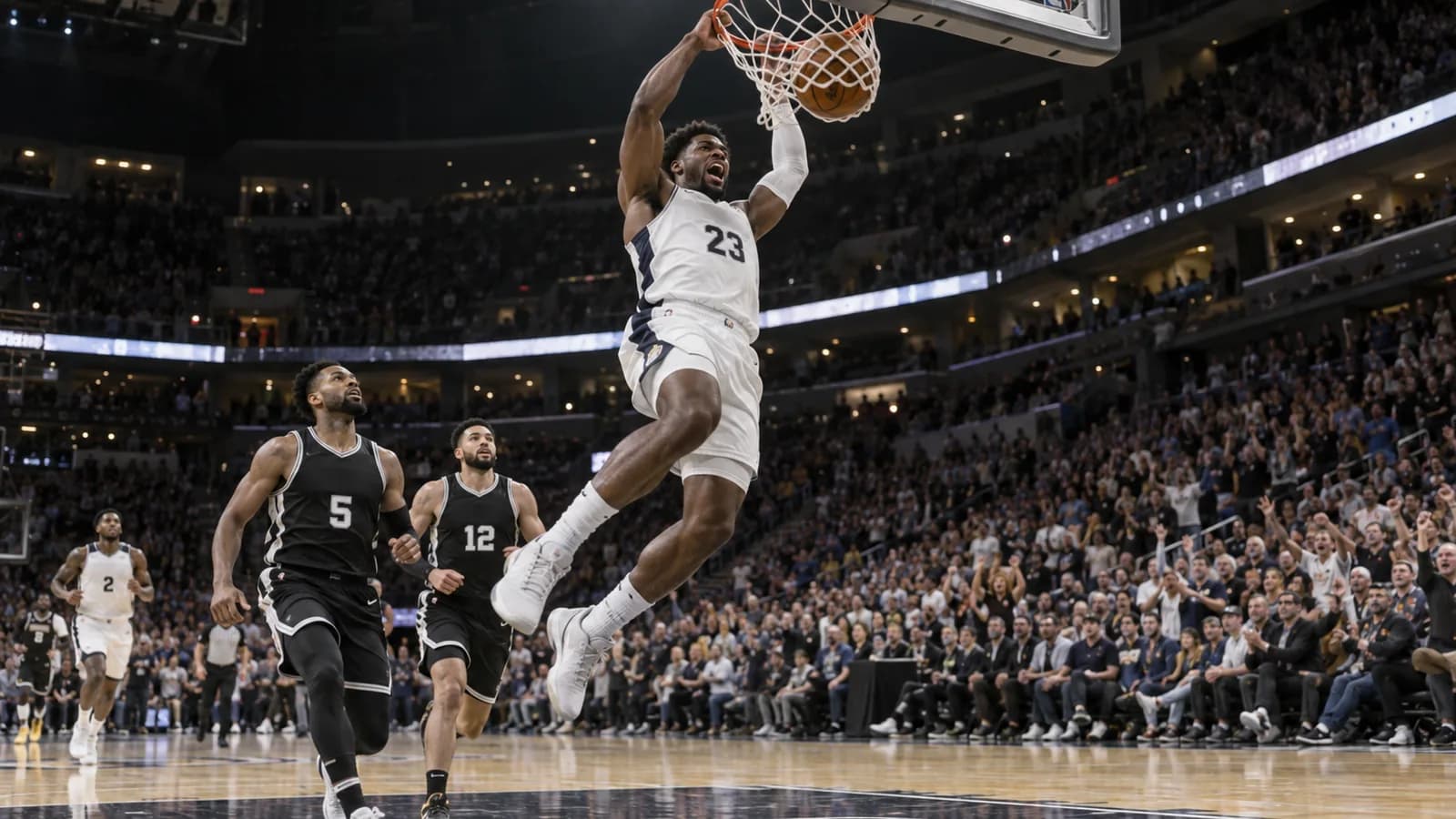
The NBA Eastern Conference is one of the two halves of the National Basketball Association, comprising fifteen franchises spread across the eastern United States and one Canadian market. Together with the Western Conference, it forms the structural backbone of the regular season and postseason, dictating scheduling weight, standings races, and the road to the NBA Finals. For fans planning a basketball trip, understanding the Eastern Conference matters because every team in this group plays its divisional opponents more often, faces a heavier slate of regional travel, and competes within a tightly defined playoff bracket that runs parallel to the West until June. The conference covers historic markets such as Boston, New York, Philadelphia, Chicago, Detroit, and Cleveland alongside Sun Belt destinations like Miami, Orlando, Atlanta, and Charlotte, plus the international footprint of Toronto. That geographic spread means the Eastern Conference reaches everyone from the corridor along Interstate 95 to the Great Lakes industrial belt and down to the Florida coast. The league splits the East into three divisions, Atlantic, Central, and Southeast, with five teams in each. Standings are settled by record, with tiebreakers running through head-to-head, division finish, and conference winning percentage. The top six clubs in the East qualify directly for the playoffs, while seeds seven through ten contest a play-in tournament for the final two spots. Whether you follow a perennial contender or are tracking a rebuilding club climbing the lottery odds, the Eastern Conference offers a season-long story that culminates in the conference finals each May. Browse team hubs on this site to track schedules, venues, and ticket availability for every Eastern Conference franchise across the full regular season and postseason.
History & structure
The Eastern Conference traces its modern identity to the 1970 NBA realignment, when the league restructured into two conferences after merging with the rival ABA roster of markets later in the decade. Before that, the East had existed as a division within a smaller league dating back to the Basketball Association of America in the late 1940s, anchored by founding clubs in Boston, New York, and Philadelphia. As the NBA expanded through the 1970s, 1980s, and 1990s, the Eastern Conference grew to include Sun Belt expansion franchises in Miami, Orlando, and Charlotte, the relocation that brought the Pistons their modern identity in suburban Detroit, and the addition of Toronto in 1995, the league's lone current Canadian outpost. Structurally, the conference is made up of three divisions of five teams each, a format the NBA adopted in 2004 when the Charlotte Bobcats joined as the thirtieth franchise. Divisional alignment is based on geography, though it has shifted multiple times across league history as clubs have moved, expanded, or rebranded. The Eastern Conference operates under the same collective bargaining agreement, salary cap, and roster rules as the West, but it has its own scheduling pattern that emphasizes intra-conference matchups. Each Eastern team plays division rivals four times, other conference opponents three or four times, and Western teams twice. That weighting shapes how playoff seeding emerges, since most games on the schedule are against fellow Eastern Conference clubs. Historically, the East has produced several of the league's defining dynasties and signature players, with championship eras built around Boston in multiple decades, the Philadelphia and New York rivalries of the early NBA, the Bad Boys era in Detroit, the Bulls of the 1990s, and more recent contenders in Miami, Cleveland, Toronto, and Milwaukee. Today the conference balances legacy markets with modern rebuilds, giving fans a mix of contender storylines and developmental arcs across the calendar.
Divisions
The Eastern Conference is split into three divisions of five teams each, organized broadly by geography. The Atlantic Division covers the northeastern corridor and stretches into Canada, featuring the Boston Celtics, New York Knicks, Philadelphia 76ers, Brooklyn Nets, and Toronto Raptors. It is one of the most historically loaded divisions in the league, with the Celtics holding the most championships in NBA history, the Knicks and 76ers carrying founding-franchise pedigree, the Nets representing one of the league's most volatile market profiles, and the Raptors providing the only non-United States presence. Divisional travel within the Atlantic is unusually compact, with several franchises within driving distance of one another along the Interstate 95 corridor, making for frequent and intense regular-season meetings. The Central Division reflects the league's industrial Midwest heartland and includes the Milwaukee Bucks, Indiana Pacers, Chicago Bulls, Cleveland Cavaliers, and Detroit Pistons. This grouping is arguably the most geographically tight in the conference, with all five clubs clustered in or near the Great Lakes region. The Central has produced multiple championship eras across its history, including dominant runs out of Chicago, signature Detroit teams in multiple decades, and a more recent era of contention from Cleveland and Milwaukee. Rivalries inside the division tend to be long-running and physical, reflecting the basketball cultures of these cities. The Southeast Division covers the league's Sun Belt expansion footprint and includes the Miami Heat, Orlando Magic, Atlanta Hawks, Charlotte Hornets, and Washington Wizards. It is the youngest division in identity, since several Southeast clubs date to the late-1980s and mid-1990s expansion waves, though the Hawks and Wizards trace back to earlier franchise histories. The Southeast has produced multiple Eastern Conference champions over the past two decades, with Miami in particular emerging as one of the conference's most consistent contenders, while Atlanta, Orlando, and Charlotte have cycled through contention and rebuilding phases. Together, these three divisions structure the schedule, define regional rivalries, and shape the seeding race in the East.
Format & playoff qualification
Eastern Conference standings are determined by overall regular-season winning percentage, not points or any aggregate score system. Each team plays an 82-game schedule that leans heavily on intra-conference matchups, with four games against each of the other Eastern teams in some cases, plus a lighter slate of head-to-head meetings with Western Conference opponents. When two teams finish with identical records, the NBA applies a structured tiebreaker sequence. The first tiebreaker is head-to-head record between the tied clubs, followed by division leader status if applicable, then division record for teams in the same division, then conference record, and then record against playoff teams in their own conference. Further down the chain, the league looks at record against playoff teams in the opposite conference, and finally point differential. These tiebreakers can decide home-court advantage, division banners, and play-in seeding. The top six teams in the Eastern Conference standings at the end of the regular season qualify directly for the playoffs, locking in seeds one through six. Seeds seven through ten enter the play-in tournament, where the seventh and eighth seeds play each other once for the seventh playoff spot, while the ninth and tenth seeds play one game to stay alive, with the loser of the seven-eight game then hosting the winner of the nine-ten game for the eighth seed. The play-in adds high-stakes urgency to the final weeks of the regular season for clubs hovering near the cutoff. Once seeding is set, the Eastern Conference bracket runs separately from the West through three rounds, with one through eight, two through seven, three through six, and four through five matchups in the opening round, all best-of-seven series.
Champions and dynasties
The Eastern Conference has produced some of the most defining champions and dynasties in NBA history. The Boston Celtics anchor that lineage as the most decorated franchise in the league, with title eras stretching from the original Bill Russell teams of the late 1950s and 1960s, through the Larry Bird era of the 1980s, into a championship run in the mid-2000s, and most recently a return to the top of the conference in the early 2020s. The Philadelphia 76ers carry their own championship legacy, including the early-1980s teams built around Julius Erving and Moses Malone, while the Detroit Pistons defined a physical, defensive style with their late-1980s Bad Boys back-to-back titles and a return to the championship stage in the mid-2000s. The Chicago Bulls of the 1990s rank among the most iconic dynasties in any North American sport, capturing multiple championships across two distinct three-peats and shaping the global identity of the NBA. In more recent decades, the Miami Heat have produced multiple Eastern Conference champion teams across separate eras, the Cleveland Cavaliers reached the NBA Finals in consecutive years during the mid-2010s with a championship in that stretch, the Toronto Raptors captured their first title at the end of that decade, and the Milwaukee Bucks claimed a championship in the early 2020s. The Knicks and Bulls hold founding histories that stretch deep into league lore, while expansion-era teams such as the Magic and Pacers have reached the NBA Finals out of the East despite not winning the championship. Together, these eras illustrate how the Eastern Conference has shifted its center of gravity across decades, from Boston dominance to industrial Midwest rivalries, to Sun Belt expansion contenders, and back again. Fans following any of these clubs can track current schedules and ticket availability through team hubs on this site.
Biggest rivalries
The Eastern Conference is built on some of the deepest and most historic rivalries in the NBA. Celtics and 76ers stand as one of the league's oldest matchups, dating to the founding era of the league and renewed across multiple championship-contending decades, including the famous 1980s battles between Boston and Philadelphia. Knicks and Celtics is another long-running northeastern series, fueled by the proximity of two of the league's flagship markets along the Interstate 95 corridor. Knicks and Nets, sometimes called the Battle of the Boroughs, is a more recent local rivalry intensified once the Nets moved into Brooklyn, while Celtics and Heat has emerged as a defining contemporary playoff series, with repeated meetings in the Eastern Conference Finals over recent years. In the Central Division, Bulls and Pistons remains one of the most physical and historically charged rivalries in basketball, rooted in the late-1980s and early-1990s playoff battles. Pacers and Knicks generated some of the most memorable Eastern playoff theater of the 1990s, while Cavaliers and Pistons, and more recently Cavaliers and Bucks, have layered modern contender stakes onto the Central. The Southeast Division has its own modern history, with Heat and Magic providing an in-state Florida rivalry, Hawks and Heat connecting two of the conference's Sun Belt markets, and Wizards and Hornets representing the mid-Atlantic and Carolinas. Across divisions, rivalries often intensify in the playoffs, as repeated postseason meetings between contenders embed certain matchups, such as Celtics and Heat or Bulls and Pacers, into the conference's broader narrative. For ticket buyers, these rivalry games tend to be among the highest-demand dates on each team's home schedule, with team hubs on this site providing matchup-by-matchup planning.
Cities & venues
The Eastern Conference covers a wide geographic footprint across the eastern half of North America. In the Atlantic Division, Boston, New York, Philadelphia, and the New York metropolitan area on the Brooklyn side anchor the Northeast Corridor, while Toronto serves as the NBA's only current Canadian market and a major international destination. Each of these cities offers a deep sports culture, downtown arenas, and strong public transit options, making Atlantic Division games particularly travel-friendly for fans planning multi-game trips. The Central Division covers the Great Lakes industrial belt, with Chicago, Detroit, Cleveland, Indianapolis, and Milwaukee. These are classic basketball markets with strong traditions, modern downtown or near-downtown venues, and accessible drives between several of them, which makes Central-on-Central road trips realistic for dedicated fans. Detroit's venue sits in downtown Detroit after the franchise's move from suburban Auburn Hills, while Milwaukee, Cleveland, and Indianapolis all play in modern downtown arenas. The Southeast Division spreads across the South, with Miami and Orlando in Florida, Atlanta in Georgia, Charlotte in North Carolina, and Washington in the District of Columbia. This division gives fans access to warm-weather destinations through much of the NBA season, which runs from October into June. Miami and Orlando are particularly popular travel markets in the winter months, while Atlanta and Washington offer major-airport hubs and downtown arenas. Charlotte's venue sits in the heart of the uptown district. Across the conference, most Eastern teams play in arenas embedded in downtown cores or major entertainment districts, making single-game visits or multi-game basketball trips relatively straightforward to plan. Team hubs on this site organize each franchise's home schedule alongside venue details so fans can plan trips around specific arenas and matchups.
Tickets — how the conference shapes pricing
For ticket buyers, the Eastern Conference's structure shapes which games tend to carry the most demand and the strongest atmosphere. Because each team plays divisional rivals four times per regular season, divisional matchups recur on home schedules and often deliver the most charged crowds, especially in long-standing rivalries such as Celtics and 76ers, Bulls and Pistons, or Heat and Magic. Non-divisional Eastern matchups generally appear three or four times across the season, which means certain marquee meetings, such as Celtics and Heat or Bucks and 76ers, are limited and tend to draw heavier interest when they appear on a home calendar. Western Conference visits are typically scheduled only once per market each season, so high-profile Western teams making their lone trip into an Eastern arena can also drive demand. Beyond rivalries, the time of year matters. Early-season home games often offer broader availability, while late-season games tied to playoff seeding races and the play-in tournament window tend to be in higher demand. Holiday schedules, marquee nationally televised dates, and standalone events such as opening night for a defending conference champion also tend to be among each team's strongest home dates. For fans planning a basketball trip, the Eastern Conference's geographic clustering makes it possible to combine multiple cities into a single weekend, particularly within the Atlantic or Central Division. Team hubs on this site list every regular-season home game with venue details, opponent context, and current availability, so fans can compare a divisional rivalry night against a less-traveled mid-week game and plan accordingly. Following individual franchise hubs is the most reliable way to monitor schedule releases, premium dates, and any postseason inventory as the playoff bracket develops.
Conference playoffs / championship round
The Eastern Conference postseason runs as its own bracket parallel to the West until the NBA Finals. Once the regular season ends, the top six teams in the conference standings lock in playoff seeds one through six. Seeds seven through ten then contest the play-in tournament. The seventh and eighth seeds meet first, with the winner securing the seventh playoff seed. The ninth and tenth seeds also meet, with the loser eliminated. The loser of the seven-eight game then hosts the winner of the nine-ten game for the eighth and final seed. From there, the Eastern Conference playoffs run three rounds before the Finals. The first round pairs the one seed against the eight, two against seven, three against six, and four against five. The second round and the Conference Semifinals reseed by bracket position, and the survivors advance to the Eastern Conference Finals. Every series is best-of-seven, using a two-two-one-one-one home-court rotation. The team with the better regular-season record holds home court within the conference bracket, regardless of seeding, until the matchup is decided. The winner of the Eastern Conference Finals is awarded the conference championship trophy and advances to face the Western Conference champion in the NBA Finals. For fans, conference playoff games typically rank among the most demanded tickets of the year, with later rounds, elimination games, and Conference Finals games generating the most attention. Each franchise's playoff inventory unlocks in stages as series and dates are confirmed by the NBA. The Eastern Conference Finals in particular are a defining event of the basketball calendar each May, often featuring rivalries refreshed across multiple postseason meetings. Team hubs on this site track playoff availability for every Eastern Conference franchise as the bracket develops.
Storylines to watch
Each Eastern Conference season carries its own storylines, but a few themes recur. The top of the conference is usually defined by which contenders are healthiest entering the spring, with Boston, Milwaukee, Philadelphia, Miami, and a rotating cast of challengers typically pushing for the top seed. New York's rise in recent years has added another high-stakes market to the contender mix. In the middle of the standings, the play-in tournament window has reshaped how mid-table clubs approach the final two months of the regular season, since the difference between the sixth and seventh seed can mean a guaranteed playoff berth or a single-elimination game. At the bottom, rebuilding clubs such as recent Pistons, Hornets, and Wizards rosters carry development storylines tied to young cores and lottery positioning. Across the conference, coaching changes, in-season trades, and the trajectory of franchise cornerstones all reshape the picture from month to month. Team hubs on this site track these storylines through the home schedule.
Help center
NBA Eastern Conference tickets — frequently asked questions
Contact our team for help using the site. For an existing order, the seller shown at checkout handles payment, delivery, and order support.
Contact supportWhy buy here
Ticket partner offers
Listings identify the partner or seller that provides the offer and handles the purchase.
Seller protection terms
Buyer protection and refund terms depend on the selected seller; review them before checkout.
Venue maps where available
Interactive seating geometry is shown when matching venue data is available for the event.
Delivery details by offer
The selected seller provides the delivery method and timing for each listing.
Partner-fed prices
Displayed prices come from ticket partner inventory and refresh on each feed's update schedule.
Help with listings
Contact AllSportsTicket about a site listing; the marketplace seller handles orders, delivery and refunds.