NBA Western Conference
Teams, divisions, champions and how the playoff path runs through the NBA Western Conference
- Partner listings
- Seller shown
- Compare prices
- Delivery details
About the NBA Western Conference
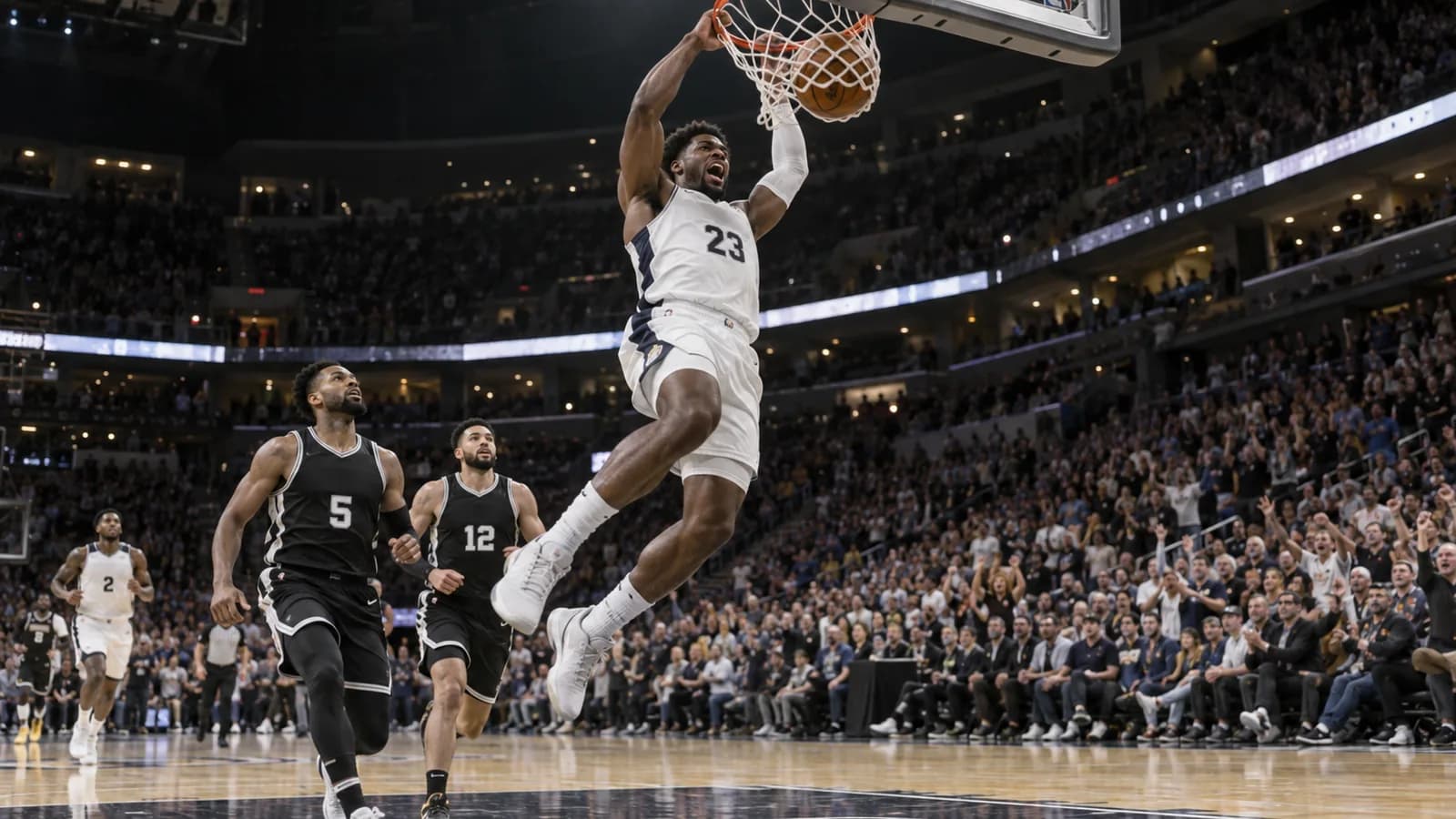
The NBA Western Conference is one of the two halves that make up the National Basketball Association, gathering fifteen franchises spread across the western two-thirds of the United States. From the Pacific coast to the Rocky Mountains and down through Texas and the Gulf, the conference covers an enormous geographic footprint and an even larger share of basketball history. For ticket buyers, it represents the bulk of the league's marquee road trips, late-night tip-offs and rivalry weekends that anchor any serious NBA schedule. The Western Conference is split into three divisions of five teams each: the Northwest, Pacific and Southwest. Those divisions feed a single conference standing that ultimately decides playoff seeding, home-court advantage and which teams will face off in the early rounds of the postseason. Because the West has historically run deeper than the East in terms of contenders, conference games often double as playoff previews, with implications for seeding stretching deep into April. Fans planning a season of basketball travel will find that almost every Western Conference matchup has some stake attached, whether it is a divisional grudge, a battle for a play-in slot or a meeting of MVP-caliber stars. This hub is designed as an evergreen reference for anyone tracking the conference, comparing schedules or budgeting for tickets. It explains how the West is structured, which rivalries shape the calendar, which cities are worth a road trip and how to think about ticket value across the regular season and playoffs. For game-by-game listings, seat maps and dated inventory, use the individual team hubs on this site, which are linked from every relevant section throughout this guide and refresh continuously as the league schedule evolves through the year.
History & structure
The Western Conference traces its modern shape back to the NBA's 1970 restructuring, when the league reorganized into two conferences and four divisions to accommodate steady expansion. Before that, the West had existed in various forms as a regional grouping of franchises in the Basketball Association of America and the early NBA, anchored by long-running clubs that have since become some of the most recognizable brands in American sport. As the league grew through the 1980s, 1990s and 2000s, the conference absorbed expansion franchises, relocations and rebrands, eventually settling into the fifteen-team, three-division format that fans recognize today. Structurally, the Western Conference is a peer of the Eastern Conference within the larger NBA. Each conference plays the same regular-season schedule template, sends the same number of teams to the postseason and crowns a conference champion who advances to the NBA Finals. Within the West, teams play more games against divisional and conference opponents than they do against Eastern Conference clubs, which heightens the importance of intra-conference results in the standings. The three divisions, Northwest, Pacific and Southwest, are organized loosely by geography, but the lines have shifted over the years as franchises have relocated and the league has rebalanced travel. Beyond logistics, the conference has cultural weight. It is associated with a fast, skill-driven style that has produced some of the league's most influential offensive eras, from the showtime fast breaks of the 1980s to the pace-and-space revolution of the 2010s. For ticket buyers, the practical takeaway is that any night on the Western Conference schedule can carry historical resonance, whether it is a Pacific Division derby in California, a Texas Triangle showdown in the Southwest or a high-altitude clash in the Northwest. The team hubs on this site track every home and road date, with seat maps and pricing context updated throughout the season.
Divisions
The Western Conference is divided into three groups of five teams, and understanding the divisions is the easiest way to make sense of the schedule, the standings and the conference's natural rivalries. Each division plays a heavier slate of games against its own members, which means divisional matchups tend to repeat several times across the calendar and often carry tiebreaker weight when seeding is decided in April. The Pacific Division covers California and the desert Southwest, gathering the Los Angeles Lakers, Golden State Warriors, LA Clippers, Phoenix Suns and Sacramento Kings. It is arguably the most glamorous division in basketball, combining storied franchises with major media markets and frequent national television windows. Pacific games are a staple of West Coast prime-time slots and tend to draw heavy travel demand, especially when marquee stars are in town. The Northwest Division stretches from the Rocky Mountains to the Pacific Northwest and includes the Denver Nuggets, Oklahoma City Thunder, Minnesota Timberwolves, Utah Jazz and Portland Trail Blazers. The Northwest leans into a tough, physical identity, with altitude in Denver and Utah, cold-weather road trips and arenas known for some of the loudest home crowds in the league. It has produced multiple conference finalists and MVP-caliber stars over the last decade, and its internal matchups often shape the middle of the Western standings. The Southwest Division anchors Texas and the Gulf Coast, comprising the Dallas Mavericks, Houston Rockets, San Antonio Spurs, Memphis Grizzlies and New Orleans Pelicans. The Texas Triangle of Dallas, Houston and San Antonio is one of the most concentrated rivalry clusters in American sport, with short travel between cities making midweek road trips realistic for traveling fans. Memphis and New Orleans round out the division with distinctive home environments and growing rosters built around young talent. Across all three divisions, the team hubs on this site list every confirmed home date, with seat maps and pricing context so fans can plan around the rivalries and matchups that matter most to them.
Format & playoff qualification
The Western Conference standings are determined by overall winning percentage across the regular season, with all conference and non-conference games counting equally. Each team plays a balanced schedule that includes more games against Western Conference opponents than Eastern Conference opponents, which gives intra-conference results outsized influence on seeding. Divisional games appear multiple times per season, and those head-to-head series often become the basis for tiebreakers when teams finish with identical records. Tiebreakers are applied in a defined order that typically begins with head-to-head record, then division record, then conference record, before moving on to more granular criteria. This is why a single late-season win against a divisional rival can flip a playoff matchup or move a team in or out of home-court advantage. Smart ticket buyers often track these scenarios in March and April, since the difference between a four seed and a five seed can mean the difference between hosting and traveling in the first round. Playoff qualification in the Western Conference works through a combined system. The top six teams in the conference standings earn automatic berths in the playoffs. The seventh through tenth seeds enter a play-in tournament, which awards the final two playoff spots through a short, high-stakes series of single-elimination games. The play-in has added another layer of meaningful basketball to the end of the regular season, and tickets for those games are often released on short notice once seeding becomes clear. Once the bracket is set, the conference plays out in three rounds: first round, conference semifinals and conference finals. Each round is a best-of-seven series with home-court advantage going to the higher seed. Team hubs on this site update as soon as dates are confirmed, with seat maps and price context for every round.
Champions and dynasties
The Western Conference has produced some of the most defining dynasties in NBA history. The Los Angeles Lakers stand at the center of that story, with multiple eras of championship basketball stretching from the Showtime years through the early 2000s three-peat and into more recent title runs. The franchise's combination of star power, market reach and sustained success has made it a permanent fixture in the conversation about the conference's defining teams. The Golden State Warriors authored one of the most influential runs of the modern era, redefining how the league values shooting, spacing and ball movement. Their championship years reshaped roster construction across the NBA and turned every visit to a Warriors road game into a marquee event. Even outside their peak title window, the franchise remains a benchmark for the West's offensive identity. The San Antonio Spurs built a different kind of dynasty, anchored by player development, defensive discipline and one of the most respected coaching cultures in professional sport. Their multi-decade run of competitive basketball set a standard for sustained excellence in the Southwest Division and influenced front offices across the league. The Dallas Mavericks broke through with a championship run built around elite international talent, and the franchise has remained a regular playoff presence in the years since. The Houston Rockets carry their own championship history from earlier eras and have repeatedly returned to contention with bold roster designs. The Denver Nuggets, Oklahoma City Thunder and a rotating cast of contenders have added recent layers to the conference's championship story, with new title windows opening as rosters evolve. Together, these franchises give the Western Conference a deep, layered championship lineage that any ticket-buying fan can trace through banner nights, ring ceremonies and matchups against historic rivals. The team hubs on this site list home dates for every contender on the current schedule.
Biggest rivalries
Western Conference rivalries are shaped by geography, postseason history and decades of star-versus-star matchups. The Los Angeles Lakers and Golden State Warriors anchor one of the most heavily televised rivalries in the league, with California bragging rights, playoff meetings and a steady rotation of high-profile players keeping the matchup in the national spotlight year after year. Their meetings reliably rank among the most in-demand tickets on the Pacific schedule. The two Los Angeles franchises, the Lakers and the LA Clippers, share a building and a city, which gives their head-to-head meetings a unique edge. The proximity rivalry has intensified during eras when both rosters are built to contend, and home dates between the clubs are often among the toughest tickets in the city. The Texas Triangle produces another cluster of rivalries between the Dallas Mavericks, Houston Rockets and San Antonio Spurs. Short travel distances, overlapping fan bases and decades of playoff history give these matchups a regional intensity that traveling fans can take advantage of with multi-city trips. In the Northwest, the Denver Nuggets, Oklahoma City Thunder, Utah Jazz, Minnesota Timberwolves and Portland Trail Blazers have built rivalries through repeated playoff meetings and head-to-head battles for seeding. Altitude games in Denver and Utah are part of the rivalry texture, and Thunder-Nuggets matchups have grown into appointment viewing as both rosters have evolved. The Phoenix Suns and Sacramento Kings round out a packed Pacific rivalry slate, with Suns-Lakers and Suns-Warriors carrying postseason history and Kings-Warriors offering a Northern California derby. Across the conference, divisional matchups are scheduled multiple times per season, which gives fans steady access to the games that matter most. The team hubs on this site list every confirmed rivalry date.
Cities & venues
The Western Conference covers a remarkable range of cities, from coastal megacities to mountain towns and Gulf Coast destinations. Los Angeles is the conference's flagship market, hosting both the Lakers and the Clippers in the same downtown arena and offering visiting fans a deep menu of entertainment, dining and travel options around game nights. San Francisco's waterfront arena gives the Golden State Warriors one of the most modern venues in professional basketball, with strong public transit access and a vibrant pre-game scene. Down the coast, Sacramento provides a more intimate, community-driven home environment for the Kings. Phoenix anchors the desert Southwest with a downtown arena surrounded by restaurants and walkable hotels, making it a popular destination for traveling fans, especially in the cooler months of the NBA calendar. In the Northwest, Denver's high-altitude arena sits in the heart of a sports-dense downtown, while Oklahoma City, Salt Lake City, Minneapolis and Portland each offer compact, fan-friendly arena districts that are easy to navigate on game days. The Texas Triangle of Dallas, Houston and San Antonio gives Southwest Division fans the chance to plan multi-city trips with manageable drives between venues. Each arena has its own personality, from the historic feel of San Antonio's home building to the modern design of Dallas's downtown venue and the energy of Houston's arena district. Memphis offers one of the most distinctive home environments in the league, with a tightly packed lower bowl and a strong local identity, while New Orleans pairs its arena with one of the most famous entertainment districts in the country. For visiting fans, the conference's mix of cities makes it ideal for combining basketball with travel. Team hubs on this site list arena addresses, seat maps and confirmed home dates for every Western Conference venue.
Tickets — how the conference shapes pricing
From a ticket-buying perspective, the Western Conference is shaped by three forces: the depth of contention in the standings, the geographic spread of its franchises and the density of marquee matchups on the schedule. Because the conference often runs deep into playoff contention, mid-tier regular-season games can carry real seeding implications, which means demand stays steadier across the calendar than in less competitive conferences. Divisional games are the backbone of the schedule for many fans. Lakers-Clippers, Mavericks-Spurs, Nuggets-Thunder and similar matchups appear multiple times per year, giving ticket buyers several chances to attend their preferred rivalry in person. These divisional dates often see stronger demand than non-conference visits, especially when both teams are in playoff position, so planning ahead and watching the schedule release closely can pay off. Marquee road trips are another defining feature of the Western Conference experience. Visits from star-led contenders to smaller markets like Memphis, Sacramento or New Orleans can be among the toughest tickets of the season in those cities, while West Coast swings through Los Angeles, San Francisco and Phoenix are popular targets for traveling fans. The Texas Triangle, with Dallas, Houston and San Antonio within driving distance of one another, offers a particularly efficient way to combine multiple games into a single trip. Weeknight and weekend pricing tend to behave differently across the conference, and big-name opponents typically command stronger demand than non-conference visitors. For fans focused on value, midweek divisional games against non-rival opponents often offer the most accessible entry points. Every team hub on this site lists confirmed home dates, with seat maps, opponent information and live pricing context so buyers can compare options across the conference and plan around the games that matter most to them.
Conference playoffs / championship round
The Western Conference playoffs are one of the most demanding postseason gauntlets in professional basketball. Once the regular season ends and the play-in tournament determines the final two seeds, eight teams enter a three-round bracket that runs from mid-April through late May or early June. Each round is a best-of-seven series, with home-court advantage going to the higher seed and games rotating between cities under the standard 2-2-1-1-1 format. The first round pairs the top seed against the eighth seed, the second against the seventh, and so on, with two and three meeting in the middle of the bracket. Higher seeds host games one, two, five and seven, while lower seeds host games three, four and six. That format makes early home dates especially valuable, since they are guaranteed regardless of how the series unfolds, while later-round games depend on how the bracket plays out. The conference semifinals re-seed within the bracket, pitting the highest remaining seed against the lowest. By the conference finals, the West is down to its two strongest survivors, and the series carries the additional weight of deciding which franchise will represent the conference in the NBA Finals. Conference finals tickets are typically among the most in-demand of the entire postseason, with strong national interest layering on top of local demand. For ticket buyers, playoff dates are released as series progress, which means inventory for later rounds and later games appears on a rolling basis. Buyers planning a playoff trip should watch the bracket carefully, since opponents, dates and game counts are confirmed only as series advance. Team hubs on this site update with each round of the bracket, listing confirmed home games, seat maps and pricing context for every available date.
Storylines to watch
Each Western Conference season brings a rotating mix of storylines that shape demand on the schedule. Title windows open and close as rosters evolve, with established contenders like the Lakers, Warriors, Nuggets, Mavericks and Suns balancing veteran cores against younger teams pushing for a leap. Emerging contenders in Oklahoma City, Minnesota, Memphis and New Orleans add another layer, while rebuilds in other markets create opportunities to see future stars early in their careers. Star movement, contract years and draft classes all influence which matchups become must-see dates. Marquee debuts, return games and milestone chases tend to drive late-season demand, especially in larger markets. Divisional races and the play-in picture often come into sharp focus in March and April, turning mid-tier matchups into high-stakes evenings. For fans tracking the conference closely, the team hubs on this site update home schedules continuously as storylines develop through the season.
Help center
NBA Western Conference tickets — frequently asked questions
Contact our team for help using the site. For an existing order, the seller shown at checkout handles payment, delivery, and order support.
Contact supportWhy buy here
Ticket partner offers
Listings identify the partner or seller that provides the offer and handles the purchase.
Seller protection terms
Buyer protection and refund terms depend on the selected seller; review them before checkout.
Venue maps where available
Interactive seating geometry is shown when matching venue data is available for the event.
Delivery details by offer
The selected seller provides the delivery method and timing for each listing.
Partner-fed prices
Displayed prices come from ticket partner inventory and refresh on each feed's update schedule.
Help with listings
Contact AllSportsTicket about a site listing; the marketplace seller handles orders, delivery and refunds.