National Football Conference (NFL)
Teams, divisions, champions and how the playoff path runs through the NFC
- Partner listings
- Seller shown
- Compare prices
- Delivery details
About the NFC
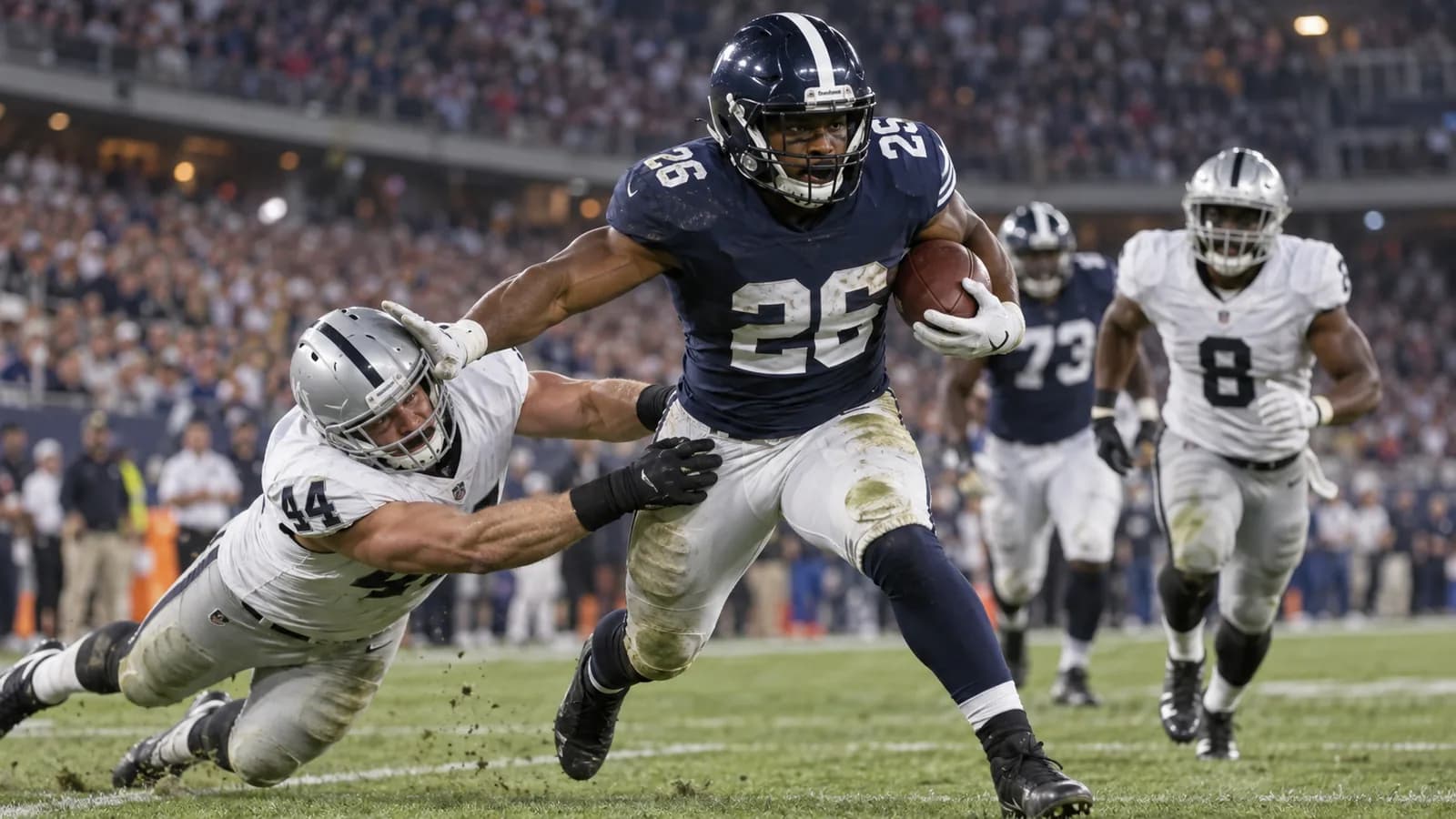
The National Football Conference, universally shortened to the NFC, is one of the two conferences that together make up the National Football League. Sixteen franchises spread across four geographic divisions compete each autumn for six playoff berths, a conference championship, and the right to represent the NFC in the Super Bowl. The conference covers a vast cultural footprint, stretching from the Atlantic coast through the industrial Midwest, down to the Gulf, across the desert Southwest, and up the Pacific shoreline to the Pacific Northwest. For fans, the NFC is shorthand for a particular flavor of football, one historically associated with bruising defenses, established legacy markets, and several of the most iconic franchises in American team sports. The NFC matters because every postseason path runs through it: half of every Super Bowl participant comes from here, and the regular-season standings inside its four divisions decide who hosts January playoff games. Whether you follow a specific franchise or simply want to plan a fall slate of games, the conference is the organizing frame that explains schedules, rivalries, and seeding. This hub is designed as an evergreen reference for fans planning travel, comparing matchups, and tracking ticket availability through team hubs on this site. You will find a primer on history, structure, and format, plus division-by-division breakdowns, a survey of cities and venues, and notes on how postseason positioning shapes the demand curve for tickets. The goal is not to predict the next champion but to help you understand the lay of the land so you can make smarter decisions about which games to attend, when to buy, and what makes any given Sunday in NFC country worth the trip.
History & structure
The NFC traces its modern identity to the 1970 merger that brought the rival American Football League into the NFL and reorganized the combined league into two conferences. Most of the franchises that existed in the pre-merger NFL were grouped into the National Football Conference, while AFL clubs and a handful of NFL volunteers formed the AFC. That heritage is why the NFC roster is heavy with legacy markets and original franchises whose histories stretch back to the early decades of professional football, including charter clubs from the Midwest and Northeast. From 1970 until 2002 the conference was organized into three divisions, with teams realigned periodically as expansion added new markets. The current four-division format took shape in 2002, when the league rebalanced both conferences into four divisions of four teams each. Each NFC division carries a directional name, East, North, South, and West, and that geographic logic largely holds, though a few franchises sit outside their compass label for historical reasons. Within the league office, the conference is governed by the same constitution, collective bargaining agreement, and competition committee as the AFC, so rules and officiating are uniform. Where the conferences diverge is in scheduling cycles, playoff seeding, and rotating interconference matchups that bring AFC opponents through each NFC stadium on a multi-year rota. The NFC also keeps its own conference championship trophy, awarded annually to the winner of the NFC Championship Game and named in honor of a pioneering league figure. Sixteen teams, four divisions, a 17-game regular season, and a seven-team postseason bracket are the structural pillars to remember. Beyond the structure, the conference has its own cultural texture: cold-weather classics in the North, marquee primetime matchups in the East, an unpredictable South, and a coastal West that has produced some of the most stylistically influential teams of the past several decades.
Divisions
The NFC East is the conference's oldest rivalry cluster, gathering the Dallas Cowboys, New York Giants, Philadelphia Eagles, and Washington Commanders. These four franchises share a century of overlapping history, four of the most valuable brands in American sports, and a habit of producing dramatic late-season swings, since every team plays the others twice a year. East games dominate national broadcast windows and routinely set the tone for the conference standings. The NFC North, often nicknamed the Black and Blue Division for its cold-weather, defense-first reputation, is made up of the Chicago Bears, Detroit Lions, Green Bay Packers, and Minnesota Vikings. Three of the four trace their roots to the 1920s and 1930s, and the rivalries between them rank among the longest continuous matchups in American team sports. Lambeau Field, Soldier Field, and the modern domes in Detroit and Minneapolis create a distinctive home-field tapestry, and division games here are frequently played in snow, wind, or sub-freezing temperatures. The NFC South is the youngest division, formed in 2002, and contains the Atlanta Falcons, Carolina Panthers, New Orleans Saints, and Tampa Bay Buccaneers. It has earned a reputation as the most volatile division in football, with first-place finishers often turning over year to year and last-place teams capable of leapfrogging contenders in a single offseason. Climate-controlled domes in New Orleans and Atlanta produce fast, high-scoring matchups, while outdoor games in Tampa and Carolina add late-season unpredictability. The NFC West rounds out the conference with the Arizona Cardinals, Los Angeles Rams, San Francisco 49ers, and Seattle Seahawks. It is geographically the largest division, requires the longest road trips, and has produced several of the most stylistically influential teams in recent NFL history. Modern stadiums in Inglewood and Santa Clara sit alongside the loud, atmospheric venues in Seattle and Phoenix, giving the division a distinctive blend of West Coast innovation, traffic, and tactical flexibility. Each division contributes a champion to the postseason and shapes how seeding and tiebreakers ultimately play out.
Format & playoff qualification
The regular season runs for 18 weeks, with each NFC team playing 17 games and taking one bye. The schedule formula is fixed and rotates predictably year over year. Each team plays its three divisional opponents twice, home and away, for six guaranteed division games. It then plays all four teams from one other NFC division, all four teams from one AFC division, and two additional NFC opponents drawn from the remaining two divisions based on the prior year's standings. A seventeenth game against an AFC opponent is added on the same standings-based rotation. Standings are ordered by overall winning percentage, with ties broken by an established sequence that begins with head-to-head record, then division record, common games, conference record, strength of victory, and strength of schedule. Tiebreakers can determine division titles, wild card berths, and seeding, so even Week 18 games involving teams of similar records carry outsized weight. The conference sends seven teams to the playoffs each year: the four division winners and three wild card teams, which are the next three best non-division-winners by record. Seeding inside the bracket runs from one through seven, ordered by record and tiebreaker. The number-one seed earns a first-round bye, while seeds two through seven play during Wild Card Weekend. From there the bracket reseeds each round, so the highest remaining seed always hosts the lowest. The conference champion is decided by the NFC Championship Game between the final two NFC teams standing, with the winner advancing to the Super Bowl against the AFC champion. Home-field advantage throughout the conference playoffs is a meaningful prize, since it can mean two home games on the path to the title.
Champions and dynasties
The NFC has produced many of the most recognizable dynasties in modern football. The San Francisco 49ers of the 1980s and early 1990s helped define the West Coast offense and remain a benchmark for sustained excellence in the conference. The Dallas Cowboys were the dominant NFC presence of the early-to-mid 1990s, stacking division titles, deep playoff runs, and multiple Super Bowl appearances. The Green Bay Packers have remained a near-constant playoff fixture for decades, anchored by Lambeau Field and a famously consistent quarterback tradition that has produced multiple eras of championship contention. The Philadelphia Eagles and New York Giants have each authored memorable Super Bowl runs in the 21st century, while the Seattle Seahawks built one of the most physically distinctive defenses of the 2010s and a sustained run of NFC West dominance. The Tampa Bay Buccaneers, New Orleans Saints, and Atlanta Falcons have each enjoyed defining seasons that have reshaped how the NFC South is perceived. More recently, the conference has been characterized by depth rather than a single hegemonic franchise: the 49ers have returned to perennial contention, the Eagles have stacked successful seasons, the Detroit Lions have ended a long playoff drought, and the Rams have shown how aggressive roster building can compress a championship window. The Washington Commanders, Chicago Bears, Minnesota Vikings, Carolina Panthers, and Arizona Cardinals each carry significant chapters of conference history, from championship appearances to playoff upsets that altered the bracket. The NFC Championship Game itself has become a stage for some of the most memorable moments in football, frozen-field finishes in the North, dramatic comebacks in the South, and West Coast classics that have produced lasting cultural touchstones. Rather than chase fictional scores, the takeaway for any fan or traveler is that the NFC's championship history is broadly distributed, with at least one defining era from nearly every franchise on the map. Planning a trip around a contender, a rival, or a throwback uniform game is part of the appeal.
Biggest rivalries
The NFC is rivalry-rich, partly because the division format guarantees six matchups per team between four familiar opponents every season. The Packers and Bears own one of the oldest continuous rivalries in American team sports, a NFC North fixture that predates the Super Bowl era and is played twice each season in two distinct climates. Cowboys against Eagles and Cowboys against Giants are the centerpiece feuds of the NFC East, drawing some of the largest television audiences of any regular-season games and routinely landing in primetime windows. Eagles against Giants and Commanders against Cowboys add layers of overlapping history that make the East a near-perpetual story line. In the North, Vikings against Packers and Lions against any divisional opponent have become must-watch matchups as Detroit's recent resurgence has reset the balance of power. The NFC South features the Saints against the Falcons, a regional rivalry rooted in Gulf Coast geography, and the Buccaneers against the Panthers, a coastal rivalry that has produced several recent playoff implications. Out west, the 49ers against the Seahawks rivalry intensified during the 2010s and remains physically distinctive whenever the two meet. Rams against 49ers has become a classic California series with deep historical roots and several recent postseason chapters. Cardinals against any division mate is a long road trip that often hinges on heat, altitude in some matchups, and divisional desperation. Beyond the divisions, certain interdivisional NFC pairings have grown into rivalries through repeated playoff meetings, including 49ers against Cowboys, Eagles against Buccaneers, and Packers against Giants. For ticket buyers, divisional and rivalry games typically draw the strongest demand and the most charged atmospheres, and they are often scheduled in marquee broadcast windows. Team hubs on this site track upcoming rivalry matchups across the conference.
Cities & venues
The NFC's geographic spread is part of its appeal. In the East, Dallas-Fort Worth, the New York metropolitan area, Philadelphia, and the greater Washington region anchor four of the largest media markets in the country, and each carries a stadium experience tied closely to its city's identity. The North spans Chicago, Detroit, Green Bay, and Minneapolis, a quartet that captures both Great Lakes culture and Upper Midwest football tradition. Lambeau Field in Green Bay is one of the most visited destinations in American sports, a small-market shrine that draws travelers from around the world. Soldier Field sits on the Chicago lakefront, while modern domed venues in Detroit and Minneapolis offer climate-controlled experiences in cities that nonetheless embrace winter football. The NFC South gathers Atlanta, Charlotte, New Orleans, and Tampa, four distinct Southern cities with very different atmospheres. Atlanta and New Orleans play indoors in some of the most architecturally striking domes in sports, while Charlotte and Tampa feature outdoor venues that lend themselves to fall tailgates and late-season Florida weather. In the West, the Los Angeles area is home to the most recent generation of stadium design in Inglewood, while San Francisco's NFC franchise plays in Santa Clara, a short ride from Silicon Valley. Seattle's venue is famous for its noise, often cited among the loudest in the league, and Phoenix-area football brings the desert into the equation with one of the league's most distinctive indoor-outdoor stadium configurations. For travelers, each of these markets pairs football with broader trip planning opportunities: museums and restaurants in the East, lakefront and dome experiences in the North, music and food traditions in the South, and Pacific scenery in the West. Team hubs on this site outline venue information and surrounding travel context.
Tickets — how the conference shapes pricing
Understanding the conference structure matters when planning ticket purchases. Because each NFC team plays its three division rivals twice every season, divisional games are the most consistently in-demand inventory on any home schedule, and they tend to anchor primetime and late-season Sunday windows. Marquee non-division NFC matchups, including 49ers-Cowboys, Eagles-Packers, Vikings-Rams, and similar pairings rotated by schedule formula, often produce comparable demand. Interconference games against AFC opponents follow the same rotation logic, and a visit from a marquee AFC franchise can be among the most expensive tickets of the year for a given NFC stadium. Beyond opponent matters timing. Home openers, Thanksgiving games in Dallas and Detroit, late-season games with playoff implications, and any matchup featuring a recently dominant team will reliably trend toward the upper end of the secondary market. Conversely, midweek non-rivalry games in mid-October often offer some of the most accessible price ranges. Weather plays a role outdoors, especially in NFC North venues where late-season games can become events in their own right. Travelers should also consider the broader weekend experience, since several NFC cities pair football trips with notable food, music, or sightseeing options. For planning specific games, divisional standings, and home schedules, refer to the team hubs on this site for each NFC franchise. Those hubs aggregate upcoming home and road dates, venue information, and current ticket inventory, and they are organized so you can quickly compare options across the conference. Buying earlier in the season for marquee divisional or rivalry games generally provides the widest seat selection, while last-minute purchases on lower-demand weeks can deliver attractive value for fans who can travel flexibly. Plan ahead for January, since playoff inventory moves on a much faster timeline.
Conference playoffs / championship round
The NFC postseason follows a seven-team bracket structure shared with the AFC. The four division winners are seeded one through four by record and tiebreaker, the three wild card teams take seeds five, six, and seven, and only the number-one seed earns a first-round bye. Wild Card Weekend pits the two seed against the seven, three against six, and four against five, all hosted by the higher seed. The bracket then reseeds for the Divisional Round, so the top remaining seed hosts the lowest remaining seed. The NFC Championship Game determines who advances to the Super Bowl as the conference representative, and it is hosted by the higher-seeded of the two surviving teams. That last detail is why regular-season seeding matters so much: a top seed can play two home playoff games on the path to the Super Bowl, while a wild card team must win three straight road games to reach the title. The NFC Championship trophy is awarded immediately after the conference final, and the postgame ceremony has become one of the most-watched moments of the football calendar. Historically, several iconic NFC Championship Games have been played in extreme conditions in the North, in domes in the South, and in coastal venues in the West, and the variety of climates is one of the conference's signature traits. For ticket buyers, the postseason runs on a compressed timeline. Wild Card and Divisional Round inventory typically opens within days of clinching, and the NFC Championship Game becomes a sought-after experience the moment the matchup is set. Travelers who follow a contender benefit from tracking seeding scenarios across the final weeks of the regular season, since hosting rights translate directly into ticket availability. Team hubs on this site surface playoff information as it becomes available.
Storylines to watch
Every NFC season produces fresh story lines, but several themes recur. Watch how the NFC East balances its four marquee franchises, since this division frequently sees three teams in postseason contention deep into December. Track the NFC North as Detroit's recent resurgence reshapes a division long associated with Green Bay and Chicago. In the NFC South, the question is usually which franchise stabilizes long enough to separate from a notoriously volatile pack. The NFC West has been one of the most stylistically influential divisions of the past decade, with the 49ers, Rams, and Seahawks taking turns defining the conference's tactical edge. Outside the divisional races, look for early-season indicators in primetime cross-division matchups, since those tend to set the broader narrative for seeding by midseason. Coaching changes, rookie quarterback debuts, and stadium-specific home-field trends are also worth tracking. Team hubs on this site cover these story lines as they develop.
Help center
NFC tickets — frequently asked questions
Contact our team for help using the site. For an existing order, the seller shown at checkout handles payment, delivery, and order support.
Contact supportWhy buy here
Ticket partner offers
Listings identify the partner or seller that provides the offer and handles the purchase.
Seller protection terms
Buyer protection and refund terms depend on the selected seller; review them before checkout.
Venue maps where available
Interactive seating geometry is shown when matching venue data is available for the event.
Delivery details by offer
The selected seller provides the delivery method and timing for each listing.
Partner-fed prices
Displayed prices come from ticket partner inventory and refresh on each feed's update schedule.
Help with listings
Contact AllSportsTicket about a site listing; the marketplace seller handles orders, delivery and refunds.