NHL Eastern Conference
Teams, divisions, champions and how the playoff path runs through the NHL Eastern Conference
- Partner listings
- Seller shown
- Compare prices
- Delivery details
About the NHL Eastern Conference
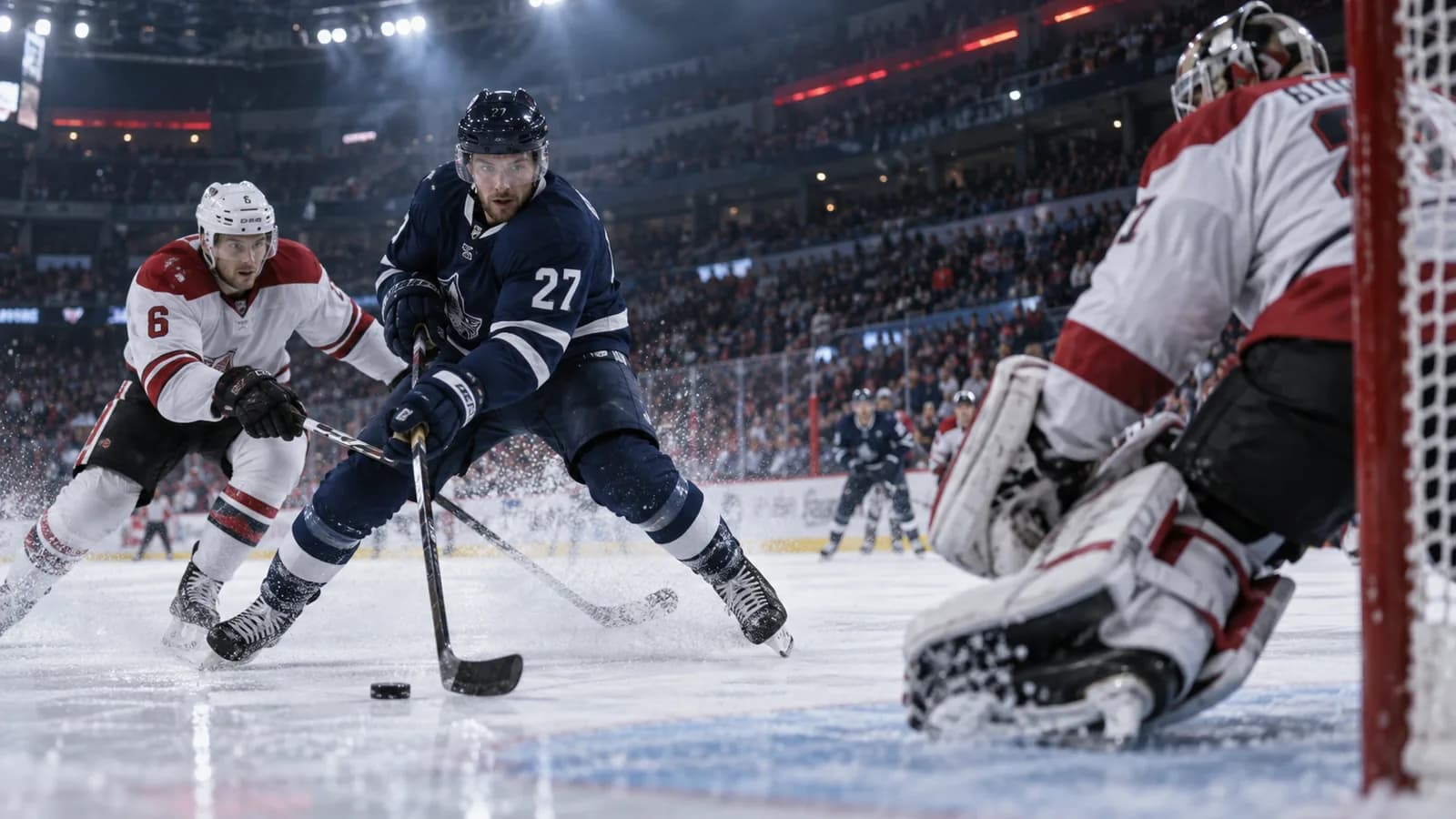
The NHL Eastern Conference is one of the two halves of the National Hockey League, gathering sixteen franchises across the eastern half of North America into a competitive bracket that runs from the first puck drop of October all the way through the conference final in late spring. Split between the Atlantic and Metropolitan divisions, the conference covers historic Original Six markets, modern Sun Belt success stories, and dense pockets of the Canadian and American hockey heartland. For fans, it is the daily heartbeat of the regular season, dictating who plays whom most often, which travel routes show up on the schedule, and which rivalries get the prime broadcast windows. For ticket buyers, it is the most useful planning unit on the calendar, because divisional and conference games tend to dominate weekend slates and generate the highest in-building intensity. The Eastern Conference matters because it produces one of the two finalists for the Stanley Cup every June, sending a representative through four rounds of postseason hockey that progressively narrow the field. It covers iconic cities such as Boston, Toronto, Montreal, New York, Pittsburgh, Washington, Detroit, Tampa Bay, and Miami, alongside growing markets in Raleigh, Columbus, and Ottawa. Whether the storyline of a given year is a veteran contender chasing one more run, a young roster pushing into the playoff picture, or a divisional race decided on the season's final weekend, the conference frames every narrative. Use this hub as a planning starting point and follow the team hubs on this site to compare schedules, venues, and ticket inventory across all sixteen Eastern Conference clubs in one place before locking in a specific game.
History & structure
The Eastern Conference in its modern form dates to the 1993 league realignment, when the NHL replaced the older Wales and Campbell conference names with the geographic East and West labels that fans still use today. That change also redrew the divisions and grouped clubs more cleanly by travel zone, a structure that has been refined several times since as the league expanded and shifted franchises. The most recent significant adjustment came in 2013, when the league moved to the current two-division Eastern setup of the Atlantic and Metropolitan, replacing the previous Northeast, Atlantic, and Southeast arrangement. The history of Eastern Conference hockey, however, runs much deeper than the name. Six of the league's Original Six franchises sit on the eastern side of the map, anchoring more than a century of professional hockey tradition in Boston, Montreal, Toronto, Detroit, and New York. Around those pillars, expansion brought new identities into the conference across multiple eras, from the post-1967 wave that added clubs such as Pittsburgh and Philadelphia, to the 1970s arrivals on Long Island and in Washington, to the 1990s Sun Belt push that introduced Florida and Tampa Bay. The conference also absorbed franchise relocations, most notably the move that placed a club in Raleigh and the shifts that brought hockey to Columbus and New Jersey. Structurally, the Eastern Conference is one half of a thirty-two team league, with sixteen teams split evenly into two divisions of eight. Each division crowns a regular-season leader and feeds four teams into the playoff bracket, where the conference ultimately produces a Stanley Cup finalist. That blend of long memory and modern structure is what gives every Eastern game a sense of stakes that ties one night's result back to decades of context.
Divisions
The Eastern Conference is built around two divisions of eight teams each, with the Atlantic skewing toward the northeast and Canada and the Metropolitan stretching down the Atlantic seaboard into the Mid-Atlantic. The Atlantic Division features the Boston Bruins, Buffalo Sabres, Detroit Red Wings, Florida Panthers, Montreal Canadiens, Ottawa Senators, Tampa Bay Lightning, and Toronto Maple Leafs. It is a division of contrasts, blending Original Six tradition in Boston, Detroit, Montreal, and Toronto with the modern Sun Belt presence of Florida and Tampa Bay and the Canadian capital identity of Ottawa. Travel within the Atlantic is some of the most demanding in hockey, since teams routinely fly from the deep south to Quebec and Ontario inside the same road trip, but the payoff is a roster of buildings that consistently rank among the most atmospheric in the sport. The Metropolitan Division is made up of the Carolina Hurricanes, Columbus Blue Jackets, New Jersey Devils, New York Islanders, New York Rangers, Philadelphia Flyers, Pittsburgh Penguins, and Washington Capitals. This grouping is shaped by geography, with most member cities sitting along the Boston to Washington corridor and the lone outlier in Columbus connecting the division to the Midwest. The Metropolitan tends to produce some of the league's most physical regular-season hockey, in part because so many of its teams play each other multiple times under bus-trip conditions that intensify familiarity. Divisional alignment matters for fans because it dictates the rhythm of the schedule. Teams play their divisional rivals more often than any other opponents, which means season tickets, mini-plans, and single-game purchases are dominated by these matchups. Standings are also tracked within each division as well as in the wider conference, with division leaders earning top playoff seeds. When planning a schedule, fans can use the team hubs on this site to filter by division opponents and quickly see when the most familiar names are in town, which is often the surest way to find a game with playoff-style energy in the regular season.
Format & playoff qualification
Eastern Conference standings are decided by the same point system used across the NHL. Teams earn two points for a regulation, overtime, or shootout win, one point for an overtime or shootout loss, and zero for a regulation loss. Across an eighty-two game regular season, those points add up into a divisional and conference table that determines playoff seeding. The top three finishers in each division qualify directly for the postseason, while the next two clubs from each conference with the most points enter as wild card teams, giving the Eastern Conference eight playoff participants in total. Tiebreakers come into play when teams finish level on points and have historically considered regulation wins first, then regulation plus overtime wins, then head-to-head record, and finally goal differential. This is why so many Eastern Conference games late in the schedule carry weight far beyond a single result, since a regulation win can be the difference between a home-ice playoff seed and a first-round road trip. Playoff qualification is structured so that the two division winners with the better records become the top two seeds in the conference, followed by the remaining division finishers and the wild card entrants. First-round matchups pit division leaders against the conference's wild card teams, with the rest of the bracket largely contained within each division. That format intentionally rewards regular-season excellence with a more favorable opening round and keeps geographic rivalries alive deep into the postseason. For fans planning around the standings, the closing weeks of the regular season often deliver the most consequential Eastern Conference action of the year as teams jockey for divisional position, home ice, and the avoidance of specific first-round opponents.
Champions and dynasties
The Eastern Conference has produced many of the defining champions in modern NHL history, with multiple eras shaped by sustained excellence on the eastern side of the bracket. The Original Six era saw Montreal, Toronto, Boston, and Detroit accumulate the bulk of the league's early championships, with the Canadiens in particular establishing themselves as one of the most successful franchises in North American professional sports. The Bruins and Maple Leafs added their own chapters during that period, building championship traditions that still shape the way their fan bases approach every season. In the expansion and post-expansion era, the Eastern Conference continued to deliver title-winning rosters, with the New York Islanders establishing a dynasty in the early 1980s that produced four straight championship runs and built one of the deepest playoff legacies of any franchise. The Edmonton-era arc was largely a Western Conference story, but the East responded in the 1990s with the New Jersey Devils emerging as a defensive juggernaut and Pittsburgh assembling some of the most decorated rosters of the era. The Devils, Penguins, and New York Rangers all delivered championship moments during this stretch, while the Detroit Red Wings, then aligned in the East, built a Hall-of-Fame core that would carry over after their later move west. In the 2000s and 2010s, the Eastern Conference saw new contenders rise, including a sustained run from the Pittsburgh Penguins around a core of franchise stars and another from the Chicago-era Western shift that nudged Detroit into different alignment. More recently, the Tampa Bay Lightning have established themselves as one of the most consistent contenders in the league, and the Washington Capitals broke through after years of postseason near-misses. Each of these eras has reshaped how Eastern Conference success is defined, layering modern dynasties on top of Original Six tradition without erasing either.
Biggest rivalries
Few corners of professional sports concentrate as many storied rivalries as the Eastern Conference. The Bruins and Canadiens carry a feud that stretches back nearly a century and is widely considered the most decorated rivalry in hockey, fueled by countless playoff series and the constant proximity of Boston and Montreal in the standings. The Maple Leafs and Canadiens add a uniquely Canadian dimension, pitting the country's two largest hockey markets against each other in a matchup that dominates Hockey Night in Canada broadcasts whenever the two teams meet. Within the Metropolitan, the Rangers, Islanders, and Devils share one of the densest tri-team rivalries in the league, with three franchises packed into a single metropolitan area and a long playoff history that intensifies every regular-season meeting. The Penguins and Flyers carry another defining Metropolitan rivalry, blending Pennsylvania pride with a long postseason ledger that has produced some of the most physical hockey of the modern era. The Capitals have built rivalries with Pittsburgh in particular, with multiple playoff series between the two clubs shaping a generation of fans on both sides. In the Atlantic, the Lightning and Panthers have developed into a sharp intra-Florida rivalry that has grown alongside both teams' rise into the top tier of the conference, while the Sabres, Senators, and Red Wings each carry regional rivalries tied to long shared histories. For fans planning a trip, rivalry weekends are often the most coveted dates on the schedule, which is why the team hubs on this site can be a useful starting point when comparing inventory for matchups that consistently sell out faster than non-divisional dates.
Cities & venues
The Eastern Conference spans some of the most iconic hockey cities in North America. Boston anchors the Atlantic with a downtown arena set among one of the most passionate sports cultures on the continent, while Montreal and Toronto bring two of the largest, oldest, and most engaged hockey markets in the world. Detroit completes the Original Six contingent in the East with a modern arena in a city where hockey has been a generational staple. Buffalo and Ottawa add traditional cold-weather hockey settings, each with its own civic identity and a fan base that lives and dies with its team. Tampa Bay and Florida give the conference its Sun Belt anchors, with two arenas that have built strong matchday cultures while attracting visiting fans from across the country. In the Metropolitan, New York City hosts two franchises in the Rangers and Islanders, while New Jersey adds a third in the broader metropolitan area, creating one of the most concentrated hockey footprints in the league. Philadelphia and Pittsburgh round out Pennsylvania's contribution to the conference, with two storied arenas and a long rivalry that defines so many trips between the cities. Washington, Carolina, and Columbus give the conference its mid-Atlantic and Midwestern reach, with each city offering a distinct atmosphere and a different mix of resident and visiting fans on any given night. Each venue varies in size, sightlines, and amenities, which is why ticket buyers often find it useful to plan around both the matchup and the building. The team hubs on this site break down the home arenas, seating areas, and typical demand patterns for every Eastern Conference team, making it easier to compare experiences across cities before committing to a specific date.
Tickets — how the conference shapes pricing
The Eastern Conference matters enormously for ticket buyers because it defines the rhythm of the home schedule for every team within it. Divisional games appear on the schedule multiple times per season for each club, which means that matchups inside the Atlantic and Metropolitan tend to make up the largest single block of any team's home calendar. Those games typically generate the strongest in-building atmospheres outside of the postseason, particularly when traveling fan bases from nearby cities turn the building into a split crowd. For planning purposes, that translates into a useful pattern: divisional and conference matchups, especially weekend dates, tend to be among the highest-demand inventory of the year, while midweek non-conference games often offer more flexibility. Pricing across the conference covers a wide spectrum depending on city, building, day of week, and opponent, with marquee Original Six and rivalry dates typically sitting at the premium end and weekday games against non-rival opponents offering more accessible entry points. Buying patterns also shift dramatically late in the season, when standings races tighten and previously routine games can suddenly carry playoff implications. For fans who care about specific matchups, planning earlier in the season is often the most flexible approach, while fans focused on atmosphere over opponent may find more value in late-season divisional games when the standings are in motion. The team hubs on this site list upcoming home dates for every Eastern Conference club, making it easier to filter by opponent, weekend versus weekday, and time of year before clicking through to a specific game. That is usually the most efficient way to translate the conference schedule into an actual ticket plan, especially for fans considering multiple cities or rivalry weekends.
Conference playoffs / championship round
The Eastern Conference playoffs are a four-round bracket that produces one of the two Stanley Cup finalists each June. Eight teams qualify from the conference, with the top three finishers in each division joined by two wild card entrants. The first round is structured to keep divisional rivalries intact, pitting division winners against wild card teams and the second and third place finishers in each division against each other. This setup produces some of the most familiar and intense series of the postseason, since first-round opponents are often teams that have played each other multiple times already during the regular season. The second round, known as the divisional final in practice, continues the bracket within each division, before the conference final brings together the two surviving clubs from the Atlantic and Metropolitan to determine the Eastern Conference champion. The winner advances to the Stanley Cup Final to face the Western Conference champion. Every round is a best-of-seven series, which means the bracket can swing on a single bounce in overtime or stretch into a grueling fourteen-game month for a team that reaches the conference final. For fans, that format makes Eastern Conference playoff hockey both intense and highly local, with most series featuring familiar opponents and home buildings that have been hosting these matchups for years. Playoff tickets across the conference are typically among the highest-demand inventory of the year, particularly for clinching games and rivalry matchups, and demand can shift quickly as series move between cities. The team hubs on this site track home dates as series progress, which makes them a practical starting point for fans planning to follow a deep Eastern Conference run.
Storylines to watch
Storylines in the Eastern Conference tend to track three overlapping arcs in any given year. First is the established contender story, with multiple Atlantic and Metropolitan clubs typically entering the season expected to compete for a deep playoff run based on their core rosters and recent results. Second is the divisional race, with positioning in both the Atlantic and Metropolitan often coming down to the final weeks and shaping first-round matchups in ways that can define the entire postseason. Third is the rising team narrative, with younger rosters frequently emerging into the wild card picture and pushing established franchises to defend their playoff status. Layered on top are individual storylines, including franchise stars chasing milestones, coaches managing roster transitions, and traditional powerhouse markets responding to multi-year cycles. For fans, the most useful approach is often to track both the conference standings and the divisional ones, since either can produce the season's most consequential games. The team hubs on this site update with each club's home schedule, making it easier to plan around storylines as they develop.
Help center
NHL Eastern Conference tickets — frequently asked questions
Contact our team for help using the site. For an existing order, the seller shown at checkout handles payment, delivery, and order support.
Contact supportWhy buy here
Ticket partner offers
Listings identify the partner or seller that provides the offer and handles the purchase.
Seller protection terms
Buyer protection and refund terms depend on the selected seller; review them before checkout.
Venue maps where available
Interactive seating geometry is shown when matching venue data is available for the event.
Delivery details by offer
The selected seller provides the delivery method and timing for each listing.
Partner-fed prices
Displayed prices come from ticket partner inventory and refresh on each feed's update schedule.
Help with listings
Contact AllSportsTicket about a site listing; the marketplace seller handles orders, delivery and refunds.