NHL Western Conference
Teams, divisions, champions and how the playoff path runs through the NHL Western Conference
- Partner listings
- Seller shown
- Compare prices
- Delivery details
About the NHL Western Conference
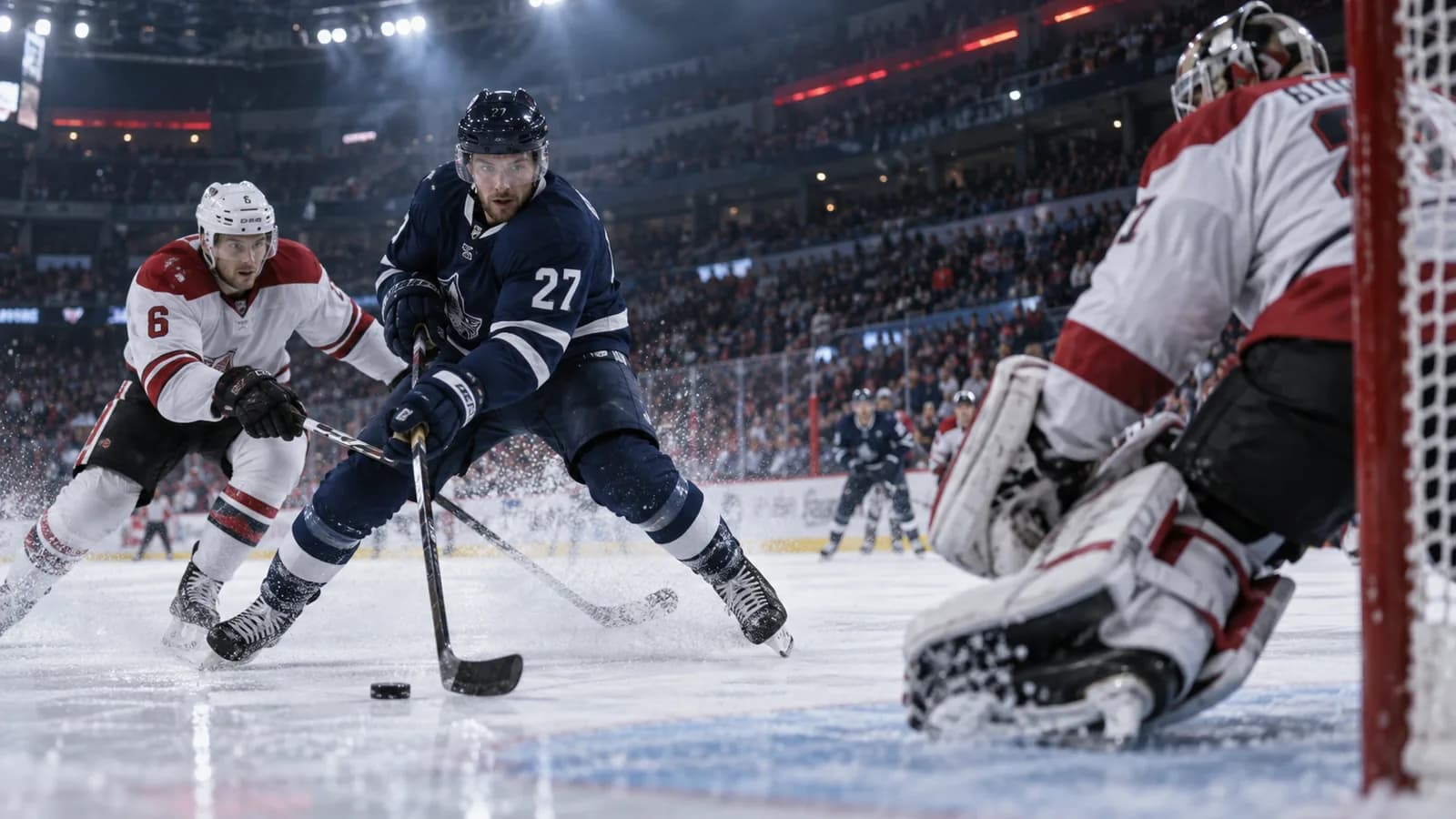
The NHL Western Conference is one of two halves that define the modern National Hockey League, gathering sixteen franchises across the Central and Pacific divisions into a single competitive bracket that runs from October through the spring. It stretches geographically from the shores of Lake Michigan to the Pacific coast, from the prairies of Alberta to the deserts of Nevada and Arizona, and it covers some of the most passionate hockey markets on the continent. For fans planning a season of games, the Western Conference matters because it shapes the schedule, the divisional rhythm, and ultimately the road to the Stanley Cup Final. Every regular-season meeting between Western clubs carries weight in the standings, and every divisional contest doubles as a potential playoff preview. The conference is home to traditional Original Six pedigree in Chicago, modern dynasties in cities like Los Angeles, expansion success stories in Las Vegas and Seattle, and historically beloved Canadian markets in Edmonton, Calgary, Winnipeg, and Vancouver. Together those sixteen teams produce a schedule that blends rivalry nights, marquee crossover matchups against Eastern opponents, and the kind of late-season divisional drama that decides playoff seeding. For ticket buyers, understanding the Western Conference is the first step in mapping out which games to target, which arenas to visit, and which rivalries deliver the loudest building atmospheres. This hub serves as the planning home for Western Conference hockey on this site, with deeper details available through the individual team hubs on this site for every Central and Pacific club. Whether the goal is a single bucket-list matchup or a full season of dates across multiple arenas, the conference is the natural starting point.
History & structure
The Western Conference in its current form is the product of decades of league evolution, expansion, and realignment that have continually reshaped how the NHL organizes its sixteen-team half of the league. The conference traces its lineage to earlier groupings such as the Campbell Conference, which existed before the league adopted the simpler Eastern and Western naming convention. Over time the NHL absorbed franchises from the old World Hockey Association, expanded into Sun Belt markets, returned to traditional cities, and added new clubs in Las Vegas and Seattle. Each wave of change reshuffled divisional alignments, and the modern two-division structure of Central and Pacific reflects the most recent realignment intended to balance travel, time zones, and competitive geography. Today the conference is built around eight teams in each division, with the Central anchored in the middle of the continent and the Pacific running along the West Coast and into the Mountain West. Structurally, the Western Conference operates as a self-contained competition inside the broader league, generating its own standings, divisional races, and ultimately its own representative in the Stanley Cup Final. Teams play a heavier schedule against divisional and conference opponents than against Eastern clubs, which sharpens the rivalries and gives Western fans more frequent looks at the same opponents throughout the year. The conference also reflects the cultural breadth of North American hockey, blending hockey-mad Canadian markets, historic American Original Six pedigree, and newer fanbases in non-traditional cities that have rapidly grown into sellout markets. For planning purposes, the about-the-conference picture matters because it explains why certain matchups appear so often, why divisional standings tighten in March, and why a Western Conference season ticket or partial plan carries a recognizable pattern of opponents. Understanding the structure makes it easier to identify the most desirable dates on the calendar and to anticipate which games will draw the strongest demand.
Divisions
The Western Conference is split into two divisions of eight teams each, and the divisional layout shapes nearly every aspect of the schedule, from travel patterns to playoff seeding. The Central Division gathers franchises in the middle of the continent, including the Chicago Blackhawks, Colorado Avalanche, Dallas Stars, Minnesota Wild, Nashville Predators, St. Louis Blues, Utah Mammoth, and Winnipeg Jets. It is a division that blends Original Six tradition in Chicago, a recent Stanley Cup pedigree in Colorado and St. Louis, a passionate Canadian market in Winnipeg, and growing fanbases in Nashville, Minnesota, Dallas, and Utah. Central games tend to feature heavy travel between American Midwest cities, with frequent prime-time matchups and a deep slate of competitive divisional contests that often decide wild card berths. The Pacific Division covers the western edge of the conference and includes the Anaheim Ducks, Calgary Flames, Edmonton Oilers, Los Angeles Kings, San Jose Sharks, Seattle Kraken, Vancouver Canucks, and Vegas Golden Knights. The Pacific is defined by a strong Canadian presence with three franchises north of the border, the long-standing California rivalry triangle of Anaheim, Los Angeles, and San Jose, and two of the most successful expansion stories of the modern era in Vegas and Seattle. Geography drives much of the Pacific schedule, with West Coast road trips creating clusters of late local-time start games that become must-see events in their home markets. The divisional structure matters because the NHL schedule weights games heavily toward division and conference opponents, meaning Central teams meet each other multiple times per season and the same is true within the Pacific. That repetition deepens rivalries, intensifies late-season standings races, and creates the framework for playoff matchups, since the first two rounds of the Western Conference postseason are typically built around divisional bracket structures. For ticket planning, knowing which division a team belongs to is a quick shortcut to identifying its most frequent opponents, its highest-demand home dates, and its most likely playoff path through the conference.
Format & playoff qualification
The Western Conference follows the same NHL regular-season format as the rest of the league, with each team playing a balanced 82-game schedule split between home and away dates. Within that schedule, Western Conference clubs face a heavier rotation of divisional and conference opponents than they do Eastern teams, which is why standings races inside the Central and Pacific feel so closely contested. Points are awarded on the standard system, with two points for a regulation or overtime win and one point for an overtime or shootout loss, while a regulation loss yields zero. Teams are sorted in the standings by total points, and the league applies a series of tiebreakers when clubs finish level, beginning with regulation wins, then regulation and overtime wins, and continuing through head-to-head record and goal differential. The playoff qualification system reserves the top three positions in each division for automatic berths, filling six of the conference's eight postseason spots. The remaining two berths go to wild card teams, the next two highest point totals in the conference regardless of division, with the higher seed crossing into the division of the lower wild card when brackets are set. This format rewards strong divisional play while still leaving a path for a strong team in a deep division to qualify through the wild card. For fans planning around the standings, late-season Western Conference games often double as elimination-style contests, with single results swinging seeding by multiple positions. Understanding the format helps explain why certain March and April home dates carry premium demand, and why divisional matchups in the closing weeks of the schedule consistently rank among the most competitive games on any team's calendar.
Champions and dynasties
The Western Conference has produced some of the defining champions of the modern NHL era, with multiple franchises stamping their identity on the Stanley Cup in recent decades. The Chicago Blackhawks built one of the signature runs of the 2010s, claiming multiple titles within a six-year window and establishing a dynasty-level core that became the league's gold standard for sustained excellence. The Los Angeles Kings followed with two championships of their own in the same decade, anchored by elite goaltending and a heavy, possession-driven style that reshaped how Western teams approached the postseason. The Colorado Avalanche, long synonymous with deep playoff runs dating back to their championship pedigree of the late 1990s and early 2000s, returned to the top of the league in the early 2020s with a fast, skill-forward roster that captured another Stanley Cup. The Vegas Golden Knights authored one of the most remarkable expansion stories in professional sports history, reaching the Stanley Cup Final in their inaugural season and later returning to claim a championship, proving that a well-constructed expansion roster could compete immediately with the league's established powers. The St. Louis Blues delivered a long-awaited title to a city that had waited generations, completing a memorable worst-to-first turnaround within a single season. Beyond those championship runs, the Dallas Stars, Edmonton Oilers, Vancouver Canucks, San Jose Sharks, and Nashville Predators have all reached the Stanley Cup Final from the Western Conference in the modern era, underscoring the depth of contention across the bracket. Older eras add even more pedigree, with the Detroit Red Wings producing dynasty-defining runs from the Western Conference before later realignment moved them East, and the Edmonton Oilers carrying a legendary 1980s legacy that still shapes the franchise's identity. For fans, the conference's championship history offers a guide to the franchises most likely to draw national broadcast attention and the highest demand from visiting supporters.
Biggest rivalries
The Western Conference is defined by some of the most intense rivalries in hockey, many of them rooted in geography, playoff history, or decades of divisional familiarity. The Battle of Alberta between the Edmonton Oilers and Calgary Flames is one of the oldest and most heated matchups in the sport, a provincial showdown that stretches back to the 1980s and still produces some of the loudest atmospheres in the Pacific Division. The California rivalry triangle linking the Anaheim Ducks, Los Angeles Kings, and San Jose Sharks delivers frequent prime-time meetings, with each pair carrying its own history of playoff battles and divisional standings races. In the Central Division, the Chicago Blackhawks and St. Louis Blues share a longstanding Midwest rivalry that has only deepened through repeated postseason collisions, while the Colorado Avalanche and Dallas Stars renew a competitive history that traces back to earlier divisional alignments. The Minnesota Wild and Winnipeg Jets bring a regional, cross-border feel to their meetings, and the Nashville Predators have built newer rivalries through hard-fought playoff series with several Central opponents. On the Pacific side, the Vegas Golden Knights have quickly built a sharp rivalry with the Edmonton Oilers through repeated playoff matchups, and the Vancouver Canucks maintain heated history with both California rivals and their fellow Canadian Pacific clubs. The Seattle Kraken, the league's newest franchise, is rapidly developing a regional rivalry with Vancouver across the border. For ticket buyers, rivalry games are almost always the highest-demand dates on a team's home schedule, drawing larger crowds, louder buildings, and more visiting fans. Identifying which rivalries fall on a specific team's calendar is one of the most effective ways to plan around the games that consistently deliver the most memorable in-arena experiences across the Western Conference.
Cities & venues
The Western Conference covers an enormous geographic footprint and includes some of the most distinctive hockey cities in North America. Chicago anchors the eastern edge of the conference with one of the league's most historic markets, while St. Louis and Nashville give the central United States two passionate Midwestern and Southern hockey homes. Minneapolis-Saint Paul hosts the Minnesota Wild in a region with deep grassroots hockey culture, and Dallas serves as the league's southern Central anchor with a fanbase built across decades. Winnipeg returns Canadian hockey to the Central Division, joined by the modern Utah market in Salt Lake City as one of the conference's newest additions. Colorado's hockey home in Denver brings a mountain setting to the conference and one of the most consistent recent contenders. Heading west, the Pacific Division stretches from the deserts to the coast. Las Vegas has become one of the league's premier event destinations, with the Vegas Golden Knights playing in a market that has fully embraced hockey. Los Angeles, Anaheim, and San Jose form the California cluster, each with its own arena identity and metropolitan draw. Seattle has rapidly emerged as a marquee NHL city, with a renovated arena that has become one of the most discussed venues in the league. North of the border, Vancouver, Calgary, and Edmonton give the Pacific three traditional Canadian markets where hockey is a year-round cultural fixture. For fans planning trips, the conference offers an unusually wide range of travel experiences, from Original Six tradition to modern entertainment districts. Detailed venue information and seating notes are available through the individual team hubs on this site for every Western Conference city.
Tickets — how the conference shapes pricing
From a ticket-buyer's perspective, the Western Conference is one of the most useful organizing lenses for planning an NHL season, because divisional and conference structure drives both schedule frequency and demand. Western teams face their division rivals multiple times per season, which means fans of any Central or Pacific club will see the same opponents return to their home arena on several different dates throughout the year. That repetition creates planning flexibility, since a fan targeting a specific matchup often has multiple chances to see it, with weekday and weekend options that typically carry different demand levels. Rivalry games and matchups against marquee opponents tend to be the highest-demand dates on any Western team's home schedule, while midweek games against non-rivals usually offer the most accessible options for fans prioritizing flexibility. Crossover games against Eastern Conference opponents are rarer and often carry premium demand when a popular Eastern club visits a Western arena, particularly for fans who want to see star players who only appear in their city once every year or two. Late-season Western Conference games frequently take on added significance because of how tightly contested the standings and wild card races tend to be, and those March and April home dates often deliver some of the most competitive hockey of the year. For planning purposes, the Western Conference framework helps narrow choices quickly, whether the goal is a single bucket-list matchup, a partial plan built around rivalry dates, or a multi-city tour through several Western markets. Specific schedule details, seating notes, and matchup-by-matchup planning information are organized through the individual team hubs on this site.
Conference playoffs / championship round
The Western Conference postseason is one of the most demanding paths to a championship in professional sports, with eight qualifying teams competing through three rounds before the conference champion advances to the Stanley Cup Final. The format builds the early rounds around divisional brackets, with the top three teams in each of the Central and Pacific divisions automatically qualifying, joined by two wild card teams from across the conference. The higher seed in the first round typically faces the lower wild card team while the second and third seeds in each division meet, which often produces immediate rematches of regular-season rivalries. Winners advance to a divisional final, and the two division champions of the Central and Pacific then meet in the Western Conference Final, with the winner representing the conference in the Stanley Cup Final. Each round is a best-of-seven series, and the depth of the Western Conference frequently produces extended series that test goaltending, special teams, and physical durability. Home-ice advantage shifts based on regular-season point totals, which adds another layer of importance to the standings races that play out across the final weeks of the schedule. For fans planning around the postseason, Western Conference home games carry some of the most charged atmospheres in any North American sport, with longstanding rivalries and divisional familiarity sharpening the intensity of every shift. Demand for playoff dates rises sharply once matchups are set, particularly for deeper rounds and conference final games. Specific playoff scheduling, potential matchup paths, and venue details are reflected in the individual team hubs on this site as each round progresses through the spring.
Storylines to watch
Each season inside the Western Conference brings a fresh layer of storylines, from emerging contenders to franchises retooling their cores. The Central Division continues to feature one of the deepest competitive races in the league, with traditional powers in Colorado, Dallas, and Winnipeg facing pushes from Nashville, Minnesota, St. Louis, and a rising Utah franchise still establishing its identity in a new market. The Pacific Division remains shaped by the ongoing window of the Edmonton Oilers, the sustained model of the Vegas Golden Knights, and the rapid arena energy of the Seattle Kraken, while California's three clubs each navigate their own roster cycles. Storylines around veteran stars chasing championships, rising young rosters, and head-to-head rivalry implications shape national broadcast slots throughout the year. For fans, the most reliable way to follow the conference's evolving narratives is through the standings, the divisional matchups, and the individual team hubs on this site for the latest scheduling and ticket planning details.
Help center
NHL Western Conference tickets — frequently asked questions
Contact our team for help using the site. For an existing order, the seller shown at checkout handles payment, delivery, and order support.
Contact supportWhy buy here
Ticket partner offers
Listings identify the partner or seller that provides the offer and handles the purchase.
Seller protection terms
Buyer protection and refund terms depend on the selected seller; review them before checkout.
Venue maps where available
Interactive seating geometry is shown when matching venue data is available for the event.
Delivery details by offer
The selected seller provides the delivery method and timing for each listing.
Partner-fed prices
Displayed prices come from ticket partner inventory and refresh on each feed's update schedule.
Help with listings
Contact AllSportsTicket about a site listing; the marketplace seller handles orders, delivery and refunds.