
NBA Finals Tickets
Format, history, venues, tickets and travel — the complete fan playbook
About the NBA Finals
The NBA Finals is the championship round of the National Basketball Association, the culmination of an eight-month season that begins in October and narrows from thirty franchises down to two. The Eastern Conference champion meets the Western Conference champion in a best-of-seven series played in mid-to-late June, with the Larry O'Brien Trophy and the Bill Russell Finals MVP award handed out at the end. For players, it is the defining stage of a career. For the league, it is the showcase event that draws global audiences and reorders the basketball landscape every summer. Fans care because the Finals concentrate everything that makes the sport compelling: legacy stakes, generational matchups, and the kind of close-out games that get replayed for decades. A single series can elevate a player into the all-time conversation, validate a front office's multi-year build, or end a dynasty. The scale is enormous. Tickets become some of the hardest to acquire in North American sport, hotel rates in host cities climb sharply, and the surrounding media footprint, from pregame walk-ins to postgame podiums, dominates the sports calendar for two to three weeks. Even casual viewers who skipped the regular season tend to tune in for the Finals, which is why the series consistently ranks among the most-watched sporting events of the year in the United States and pulls strong international numbers in Canada, the United Kingdom, Australia, the Philippines, and across Europe. Whether you are planning to attend a game in person, organize a watch party, or simply follow along, the Finals remain one of the most anticipated annual events in global sport.
Format
The NBA Finals is a best-of-seven series, meaning the first team to win four games is crowned champion. Games follow a 2-2-1-1-1 format, with the team that earned home-court advantage during the regular season hosting Games 1, 2, 5, and 7, and the opponent hosting Games 3, 4, and 6. Home-court advantage in the Finals is determined strictly by regular-season record between the two conference champions, not by seeding or playoff path, which is a distinction unique to the championship round. If either team reaches four wins before the seventh game, the series ends, so a sweep concludes in four contests while a full series can stretch to seven. Games are spaced with rest days in between to accommodate travel and television scheduling, and the entire series typically runs across roughly two weeks in June. The road to the Finals is itself demanding. Each conference champion must win three best-of-seven rounds to get there, meaning Finals participants have already played as many as eighteen playoff games before tip-off of Game 1. Regular-season standings, conference rankings, and play-in tournament outcomes all feed into the seeding bracket that produces the two finalists. On the floor, the Finals use standard NBA rules: four twelve-minute quarters, with overtime periods of five minutes if scores are level after regulation, and no aggregate scoring across games. Each game is a discrete contest. Individual game results do not carry over, but momentum, injury status, and tactical adjustments between games are scrutinized closely. The Finals MVP is awarded at the end of the series to the player judged most valuable across the entire round, regardless of which team wins the championship, though the award has historically gone to a player on the winning side.
History
The NBA Finals has been contested in some form since 1947, originally under the Basketball Association of America before the league took its current name, and the modern Finals as fans recognize it has produced a deep catalog of dynasties, upsets, and signature performances. Franchises in Boston and Los Angeles have shaped much of the early and middle history of the championship, trading title runs across decades and meeting in some of the most heavily mythologized series in American sport. The Chicago dynasty of the 1990s defined a global era for the league, while championship runs from San Antonio across the late 1990s and 2000s established a model for sustained excellence built on player development and continuity. More recently, runs by Golden State, Miami, Cleveland, Toronto, Milwaukee, Denver, and Boston have expanded the map of championship cities and reflected how player movement and modern roster construction reshape contenders quickly. Individual legacies are often defined by Finals moments. Closeout-game performances, series-saving fourth quarters, and willingness to take the last shot are still the criteria by which all-time rankings are debated. The Finals MVP, named in honor of Bill Russell, is among the most prestigious individual honors in basketball, and players who collect multiple Finals MVPs are routinely placed in the inner circle of the sport's history. Records that matter to fans tend to be qualitative as much as numerical: most championships won by a single franchise, most Finals appearances by a player, longest stretch of consecutive Finals trips by one team, and the rare cases of players winning Finals MVP for both teams over a career. The Finals have also produced cultural moments that extend beyond basketball, from trophy presentations and championship parades to viral postgame interviews. For long-time followers, the Finals are less a single event and more a continuous archive that grows by one chapter every June.
How NBA Finals tickets work
Tickets for the NBA Finals are among the most sought-after in North American sport, and access works differently than for a regular-season game. Because the matchup is not known until the conference finals conclude, on-sale timing is compressed: each team typically opens primary sales for its home Finals games only after clinching its conference, which gives buyers a short window to act. Season ticket holders for the two finalist franchises generally get first access through their existing accounts, often with the right to keep the same seats they hold during the regular season. After season ticket holder allocations, smaller releases may go to team waitlist members, sponsors, and partners, with a limited public on-sale if any inventory remains. In practice, the public on-sale for prime seats often sells out within minutes, which is why most fans without team accounts end up looking at the resale market. Demand varies by game within the series. Game 1 and a potential Game 7 typically draw the highest interest, with Game 7 prices being especially volatile because the game only exists if the series reaches it. Mid-series games at the higher-seeded team's arena often see slightly softer demand than the away-team games hosted in the other city, though all six potential dates are premium events. Location matters as well: Finals hosted in smaller-capacity arenas or in cities with a long championship drought tend to see particularly aggressive pricing. For fans planning ahead, the most practical approach is to follow team hubs on this site for the two finalists and check official team listings as soon as a conference is decided. Setting alerts, knowing which game number you are willing to attend, and being flexible on seat location all improve the odds of securing a reasonable ticket without overpaying in a heated market.
Venues
NBA Finals games are hosted at the home arenas of the two participating teams rather than at a single neutral site, which is one of the distinctive features of the championship compared to events like the Super Bowl. The team with the better regular-season record hosts Games 1, 2, 5, and 7, while the other team hosts Games 3, 4, and 6, so the venue rotation depends entirely on which two franchises advance. That means in any given year the Finals can be played in major markets such as Los Angeles, New York, Boston, Chicago, Miami, or Toronto, or in smaller markets such as Oklahoma City, Indianapolis, Milwaukee, Memphis, or Denver, each of which brings a different arena footprint and local atmosphere. Most Finals venues are modern NBA arenas with capacities between roughly seventeen thousand and twenty-one thousand seats. Many have undergone significant renovations or are recent builds, with premium club levels, courtside experiences, and improved sightlines that have raised the standard of the in-arena product over the past decade. Some host buildings are shared with NHL franchises, which influences scheduling and the arena bowl design. For fans attending in person, the venue matters for more than just the seat. Surrounding districts often include entertainment plazas, restaurants, and watch-party zones that activate heavily during Finals games, sometimes with outdoor screens for fans without tickets. Parking, public transit access, and arrival timing vary by city, and first-time visitors should plan to arrive earlier than usual because of expanded security screening during championship games. Team hubs on this site outline venue details for each franchise, and once the two finalists are known, those pages are the most efficient starting point for venue-specific planning.
Travel planning
Travel planning for the NBA Finals is shaped by uncertainty, because the host cities are not known until the conference finals end, typically about a week before Game 1. That compressed window pushes flights and hotels in the two host markets to rise sharply once the matchup is set, and the closer fans wait to game day, the more aggressive the pricing tends to be. A practical strategy for fans with flexible plans is to monitor the conference finals closely and be ready to book travel within hours of the clinching game, particularly for Games 1 and 2, which follow quickly. Flights into the host cities often see the steepest increases on dates immediately surrounding home games. Connecting through alternate airports, considering flights into nearby secondary cities, or using more flexible departure days can soften the impact. For travelers coming from outside North America, building in an extra day on either side of a game gives buffer against weather delays and the unpredictable scheduling of potential Game 6 and Game 7 dates. Hotels close to the host arena typically fill first and price highest. Staying a short transit ride away, in a neighboring district served by light rail or rideshare, is often a far better value without sacrificing convenience. Many Finals host cities also see corporate buyouts of premium hotel blocks during championship weeks, which is another reason to book quickly once the matchup is confirmed. Ground transportation is worth planning in advance as well. Rideshare surge pricing around arenas is steep on game nights, and public transit options vary widely by host city. For fans attending multiple games across both cities, building a single itinerary with refundable bookings where possible offers the most protection against series-length uncertainty.
Atmosphere
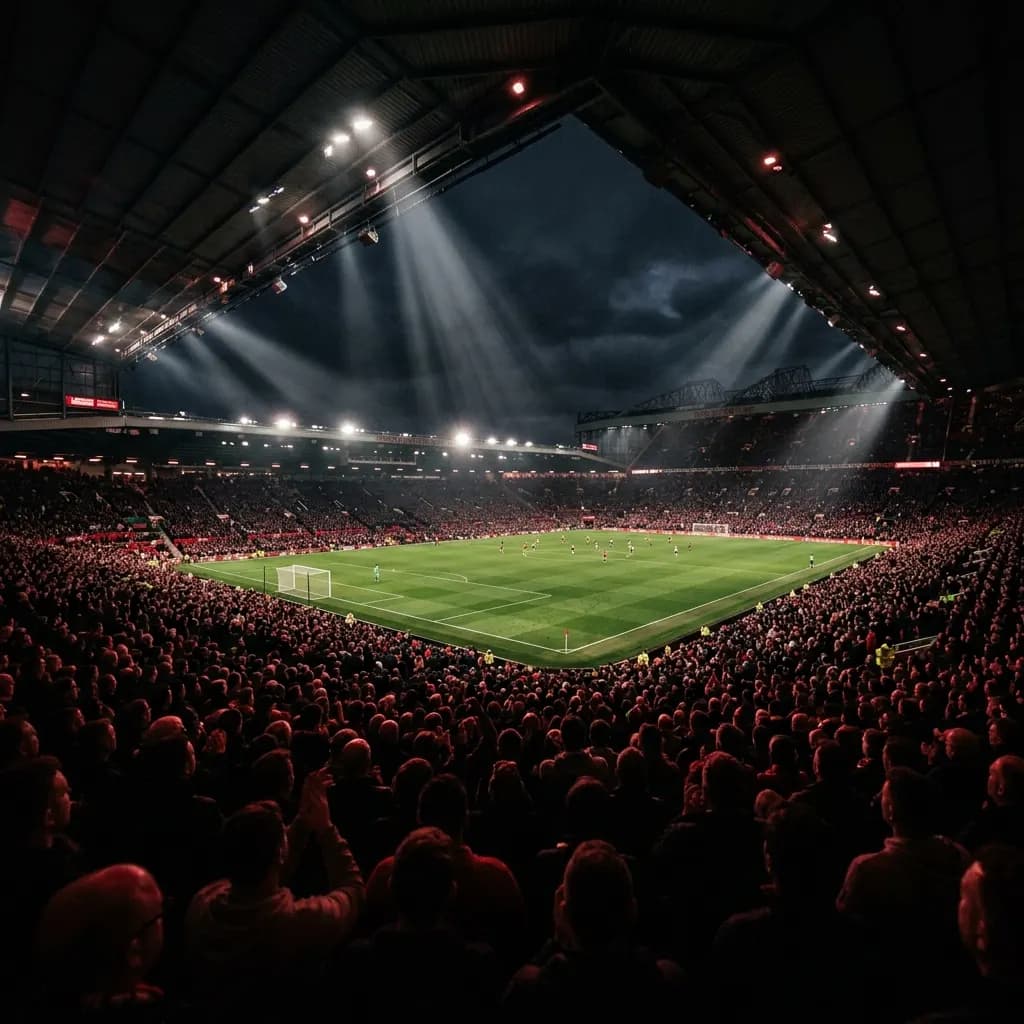
Finals nights have a charge that regular-season games rarely match. Pregame ceremonies are extended, player introductions are louder and more theatrical, and arenas often distribute T-shirts to every seat to create a uniform color across the bowl on television. National anthems are performed by major artists, and pregame walk-in tunnels become a fashion stage that attracts as much attention as the basketball itself. Inside the building, the crowd tends to arrive earlier than usual, and the energy in the concourses and surrounding plazas builds for hours before tip-off. Many host cities organize official watch parties outside the arena for fans without tickets, with large screens, food vendors, and live entertainment. These outdoor gatherings have become a defining feature of the modern Finals experience, especially in markets with a long championship drought or a deeply engaged local fan base. Rituals vary by franchise. Some teams have decades-old traditions involving chants, banners, or specific in-arena rituals at certain moments in the game. Others lean on modern production elements such as light shows, drone displays, and synchronized fan card sections. Postgame moments, particularly after a closeout win, are unscripted and unforgettable: confetti drops, trophy presentations, and on-court interviews are watched by millions and become part of league history. For first-time attendees, the pace and volume of a Finals game can be overwhelming compared to a regular-season night, and most fans recommend simply arriving early, soaking in the buildup, and being present for the full pregame routine.
Resale market
The resale market for the NBA Finals is one of the most active and volatile in North American sport, driven by limited supply, late confirmation of the matchup, and game-by-game scheduling that depends on the series score. Once the two finalists are known, inventory floods listing platforms within hours, with prices typically peaking immediately and then fluctuating based on series momentum. Games 1 and 2 hold premium pricing because they are guaranteed to be played. Games 3 through 6 are guaranteed only as a series develops, so prices for those games can shift as soon as a result tilts the series. Game 7 listings exist only conditionally and tend to be the most volatile of all, sometimes dropping sharply if a series ends early and surging late if a team is forced into a winner-take-all night. Sellers include season ticket holders releasing seats, brokers who hold championship-game allocations, and corporate partners offloading unused inventory. For buyers, the most important factors are confirming seat location, understanding any view obstructions, and accounting for service fees, which can be significant on championship inventory. Timing matters as much as section choice. Fans who can be flexible on date often find better value on midweek games or on potential elimination games where pricing has not yet stabilized. For most fans, the practical path is to follow team hubs on this site for both finalists, monitor official listings, and only move to broader resale once primary inventory is exhausted. Patience, alerts, and a clear maximum budget are the best defenses against an overheated market.
Broadcast & streaming
The NBA Finals receive comprehensive broadcast coverage across television and streaming, with the league's flagship national broadcast partners handling live game coverage in the United States and a wide network of international partners distributing the series globally. Pregame, halftime, and postgame studio programming wrap around each game, with extended coverage on close-out nights and Game 7. Live games are typically scheduled for evening tip-offs in North America to maximize audience reach across time zones. International viewers in markets such as the United Kingdom, Ireland, Germany, Australia, the Philippines, and across Latin America can usually watch through league-affiliated streaming services or regional rights holders, sometimes via delayed broadcasts depending on time difference. Replays and condensed game versions are often made available the day after each contest. Beyond the live broadcast, the Finals generate a deep ecosystem of supporting content. Daily highlight packages, player mic'd-up segments, postgame press conferences, and behind-the-scenes features are distributed across league channels and social platforms. For fans planning to follow without attending, the simplest path is to confirm which broadcaster holds rights in their country before Game 1 and schedule viewing around each scheduled tip-off, with built-in flexibility for potential Game 6 and Game 7 dates.