
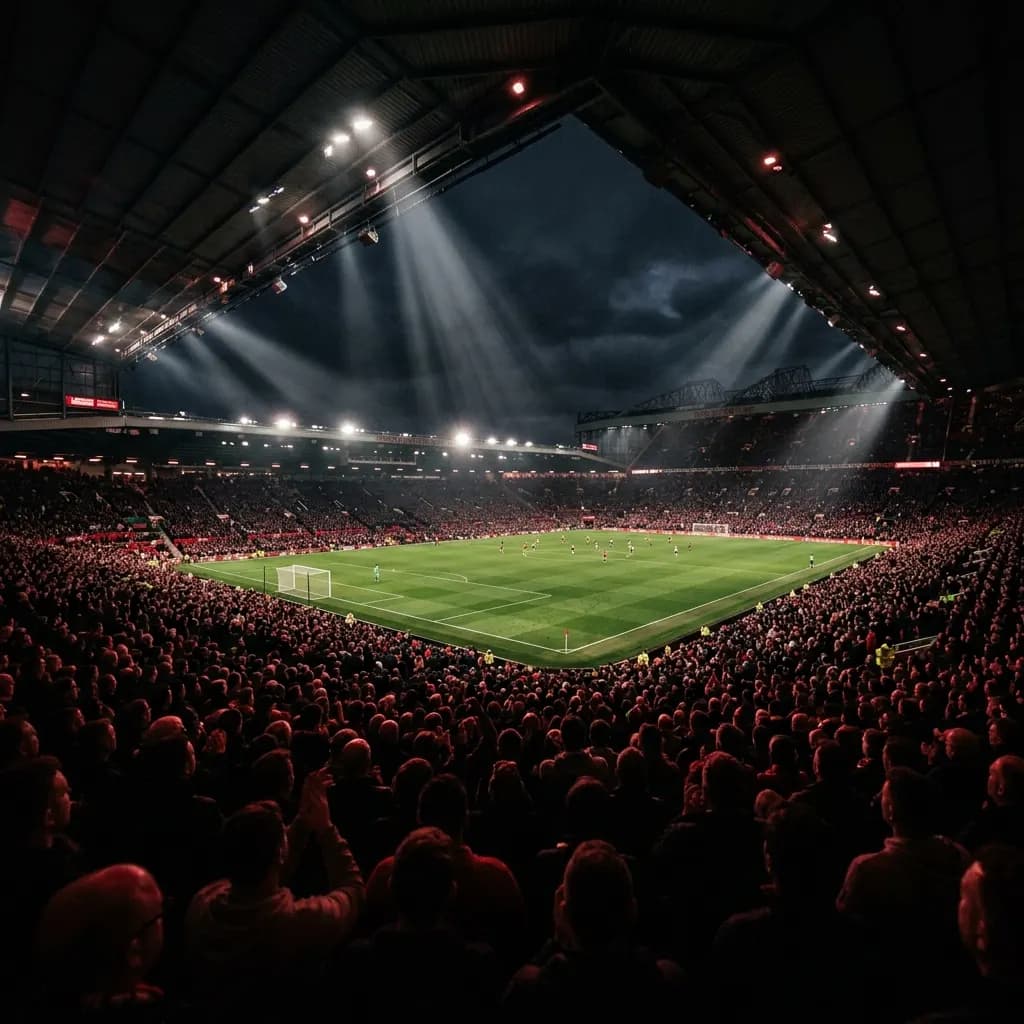
Group I
France · Norway · Senegal · Iraq
About Group I
Group I of the FIFA World Cup 2026 arrives as one of the tournament's most intriguing four-team puzzles, pairing reigning European powerhouse France with a long-awaited Norwegian return, an ambitious Senegalese unit, and a determined Iraqi side stepping back onto football's grandest stage. Les Bleus enter as overwhelming favorites, carrying the weight of recent World Cup finals and a generational talent pool that few federations on the planet can match. Norway, finally translating individual brilliance into collective qualification, brings a hunger that has been building for nearly three decades, while Senegal remains Africa's continental standard-bearer with a roster forged in Europe's top leagues. Iraq completes the quartet as the group's tactical wildcard, a side capable of frustrating elite opponents when their organization holds. With the expanded 48-team format reshaping the knockout math, Group I sits in a fascinating middle ground where one favorite, two ambitious challengers, and a disruptor will battle across three host nations. Every match matters, and the storylines stretch from Paris to Oslo to Dakar to Baghdad with genuine global resonance.
Teams in Group I
France
France arrive in Group I as the consensus favorite, a status earned through back-to-back World Cup finals and a talent pipeline that continues to produce elite players at every position. Didier Deschamps's framework, or the framework left behind by his successor by the time the tournament kicks off, has always emphasized defensive structure, midfield control, and ruthless transitions through forwards who thrive in space. Kylian Mbappe remains the focal point of the attack, a player whose presence alone changes how opposing back lines defend, while a deep supporting cast across Europe's top clubs gives the manager genuine tactical flexibility. The French federation's investment in youth development through Clairefontaine continues to pay dividends, and the squad's tournament experience is matched by few competitors. Expectations from French supporters, the federation, and the broader football public are unambiguous: top the group, advance comfortably through the early knockout rounds, and contend deep into the tournament. Anything less than a quarterfinal appearance would be considered a disappointment for a program operating at this altitude.
Norway
Norway's return to the World Cup ends a decades-long absence that has frustrated a country producing some of the most talked-about footballers in the modern game. The qualification campaign reflected a team finally building cohesion around its star power, with Erling Haaland leading the attack and Martin Odegaard orchestrating from midfield, supported by a defensive corps that has matured through experience in the Premier League, Bundesliga, and Serie A. Manager Stale Solbakken, or his successor, has worked to shape a tactical identity that maximizes Haaland's penalty-box threat while giving Odegaard the freedom to operate between the lines. The Norwegian challenge in Group I is twofold: managing the emotional weight of a generation-defining tournament debut for many players, and proving the squad can convert its individual quality into consistent collective performances. Norway will not lack for confidence or attacking firepower, but defensive discipline against France's pace and Senegal's physicality will define how far this campaign goes. Reaching the knockout stage would represent meaningful national progress.
Senegal
Senegal continue to set the standard for African football, building on an Africa Cup of Nations title and consistent World Cup qualification campaigns that have established the Lions of Teranga as a genuine global contender. The squad blends athletic, physical defenders schooled in European leagues with creative midfielders and forwards capable of breaking down organized back lines. Sadio Mane remains a symbolic and tactical leader, while a new generation of players continues to emerge through France's Ligue 1 and the wider European system. Manager Aliou Cisse, or the federation's chosen successor, has prioritized a robust defensive shape paired with quick vertical transitions, a profile that has historically given top European sides genuine problems. Senegal's path through Group I almost certainly runs through results against Norway and Iraq, with the France match serving as both a measuring stick and an opportunity to make a continental statement. African supporters globally will follow this campaign closely, and the team carries genuine knockout-round ambition rather than simply hoping to participate.
Iraq
Iraq complete Group I as a side whose World Cup return carries deep regional significance and a tactical profile that should not be underestimated. The Lions of Mesopotamia have rebuilt steadily through Asian qualifying, leaning on a disciplined defensive block, a hard-working midfield, and forwards who combine European-based experience with domestic and Gulf-league talent. The federation has invested in youth development and coaching infrastructure, and the qualification campaign reflected a team capable of frustrating more decorated opponents through organization and set-piece efficiency. Drawing France, Norway, and Senegal represents an enormous challenge on paper, but the expanded 48-team format means a strong defensive performance and a single result could realistically open a knockout-stage path. Iraqi football has historically thrived on emotional, unified team performances during major tournaments, and the squad will arrive determined to honor a passionate national fanbase. Even results that fall short of advancement can serve as meaningful building blocks for the federation's longer-term development trajectory across upcoming Asian Cup and qualifying cycles.
Group format & advancement
Group I follows the standard FIFA World Cup 2026 group-stage format, with each of the four teams playing three matches in a single round-robin. Three points are awarded for a win, one for a draw, and none for a loss, with goal difference, goals scored, and head-to-head results used as primary tiebreakers if teams finish level on points. Under the expanded 48-team tournament structure, the top two teams from Group I advance automatically to the Round of 32, while the eight best third-placed sides across all twelve groups also progress. That format gives Iraq and Norway, in particular, a realistic statistical pathway even if results against France prove difficult, making every group-stage match meaningful from kickoff through stoppage time.
Where Group I matches are played
Group I matches are distributed across host cities in the United States, Canada, and Mexico, the three co-hosting nations of the 2026 tournament. American venues likely to feature include major stadiums in cities such as New York/New Jersey, Los Angeles, Dallas, Atlanta, Miami, Seattle, Boston, Philadelphia, Kansas City, Houston, and San Francisco Bay Area, each offering NFL-scale capacity and recent infrastructure investment. Canadian hosts Toronto and Vancouver provide further northern options, while Mexico City, Guadalajara, and Monterrey round out the southern matchday experience. France, Norway, Senegal, and Iraq supporters traveling to follow the group should expect a range of climates, time zones, and matchday cultures, with each host city offering distinct fan-zone programming, local cuisine, and pre-match traditions. Specific group-stage venue assignments are confirmed by FIFA closer to the tournament, and ticket holders should monitor official channels for finalized match-by-match locations as the schedule becomes available.
How to buy Group I tickets
Group I tickets are sold exclusively through FIFA's official ticketing platform at FIFA.com/tickets, which operates the only authorized primary market for all 2026 World Cup matches. Supporters can register for ticket-sales windows, enter application phases, and request specific Group I matches or four-match team-following packages through that platform. Pricing varies by category, match importance, host city, and demand, with France group-stage fixtures typically commanding the strongest interest and Iraq, Norway, and Senegal matches offering more accessible options. Demand for marquee Group I matches will be substantial, so applying during early sales windows, maintaining flexibility on category and seating, and monitoring FIFA's communications closely are the most reliable strategies for securing seats.
Storylines & what to watch
Group I offers narrative depth that extends well beyond the standings. France's pursuit of another deep tournament run, anchored by Kylian Mbappe at the peak of his powers, places enormous spotlight on Les Bleus from the opening whistle, with every match treated as a referendum on the program's continued dominance. Norway's return after a generational absence transforms each Norwegian fixture into a celebration for a country that has waited decades to see its golden generation on the biggest stage, with Haaland and Odegaard finally united in a World Cup context. Senegal carries the continental ambitions of African football, building on recent continental success and looking to push past the Round of 16 ceiling that has historically constrained the continent's representatives. Iraq's appearance adds regional and political weight, representing a footballing community whose passion has long outpaced its global tournament opportunities. Sub-plots around managerial decisions, generational handovers, and individual battles in midfield and attack will define the group's identity, ensuring Group I produces moments that resonate far beyond the final group-stage standings.