
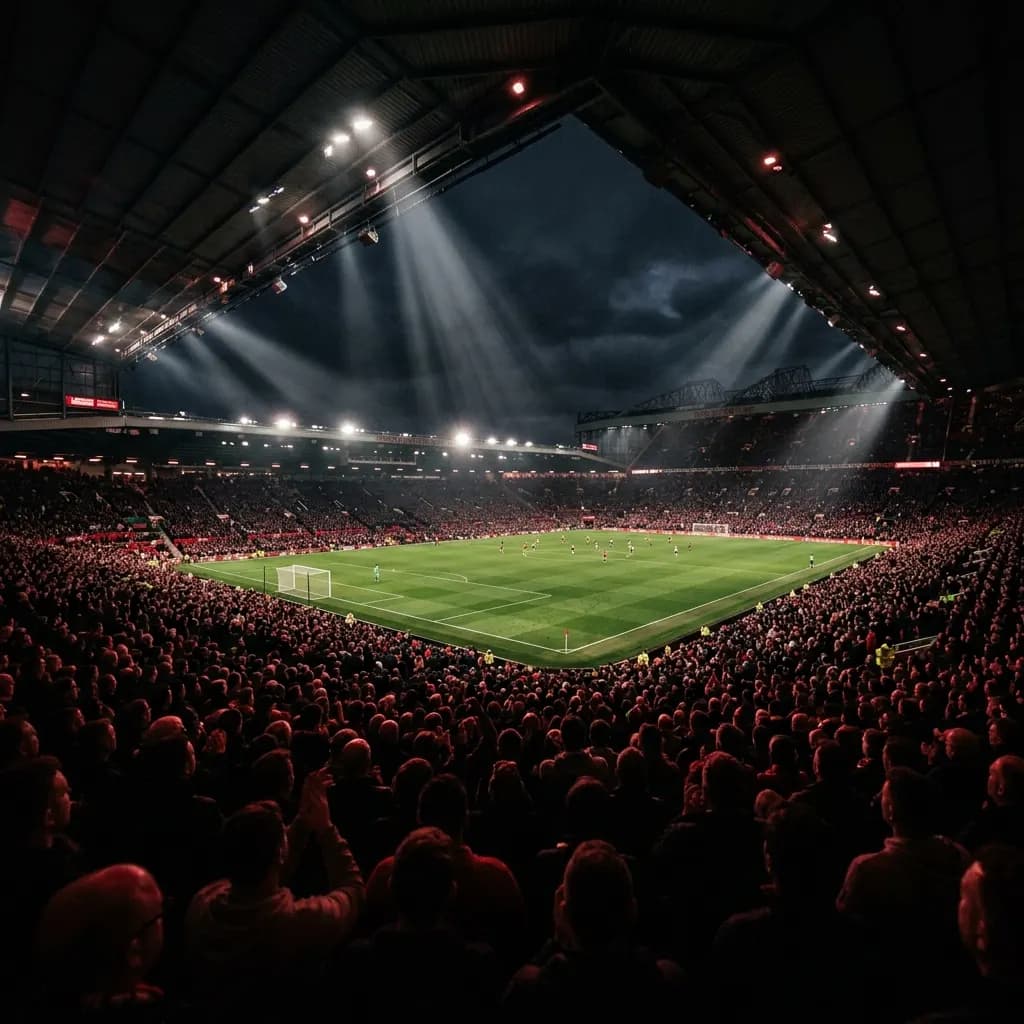
USA at the 2026 World Cup
CONCACAF · Group D · Host nation
About USA at the 2026 World Cup
The 2026 FIFA World Cup arrives on American soil at a pivotal moment for the United States Men's National Team, and the gravity of the occasion is impossible to overstate. As co-hosts alongside Canada and Mexico, the USMNT enters the tournament with the automatic qualification that comes with hosting status, but also with the weight of a soccer-mad generation finally seeing the world's biggest sporting event come home for the first time since 1994. Captain Christian Pulisic leads what has been dubbed the most talented American squad ever assembled — a roster stacked with players at top European clubs, raised on the dream of this exact moment. The hopes are tangible: advance from the group stage with authority, navigate a knockout bracket on home turf with raucous American crowds behind them, and ideally produce the deepest USMNT run in World Cup history. The generational stakes extend beyond results. A strong showing could permanently reshape soccer's place in the American sports hierarchy, locking in casual fans who tune in for the spectacle and converting them into long-term supporters. From the supporters' marches in host cities to the school-day watch parties that will pause classrooms nationwide, the 2026 World Cup is positioned to be the team's defining cultural moment. Whether the squad delivers a fairy-tale knockout run or simply competes hard in front of the largest American TV audiences in soccer history, this tournament will be remembered as the inflection point — the moment the USMNT either seized its home World Cup or learned the harshest lessons from it.
USA at the World Cup — history
## A Pioneer With Long Gaps
The United States holds a curious place in World Cup history — a founding participant at the inaugural 1930 tournament in Uruguay, where the Americans reached the semifinals and finished third, still the team's best-ever result. That early high was followed by the famous 1950 upset of England in Belo Horizonte, a 1-0 result so improbable that wire services reportedly assumed it was a typo. After 1950, however, the USMNT vanished from World Cup stages for forty years, a gap that defined American soccer's wilderness era.
## The Modern Era
The team's return at Italia 1990 launched a streak of seven consecutive appearances from 1990 through 2014, including the symbolic home tournament in 1994 that catalyzed the launch of Major League Soccer. The 2002 quarterfinal run in South Korea and Japan stands as the modern peak — a roster including Landon Donovan, Brian McBride, and Claudio Reyna pushed Germany hard before bowing out 1-0, with several controversial moments still debated by American fans today.
## Pain and Rebuild
The failure to qualify for Russia 2018 — a stunning defeat in Trinidad — triggered a complete rebuild, accelerating youth pathways and producing the European-based core now leading the team. Qatar 2022 marked the return, with a young squad advancing from the group before falling to the Netherlands in the round of sixteen. That tournament served as a dress rehearsal. The 2026 home World Cup represents the first real chance to convert decades of investment, infrastructure, and talent development into a defining tournament moment.
USA's squad
## Between the Posts
Goalkeeper Matt Turner has long been the senior figure in the position, having backstopped the Qatar 2022 run, with competition pushing him from emerging shot-stoppers in MLS and Europe. The keeper battle is one of the more open positions, and the staff has signaled it values shot-stopping and distribution over pure command of the area.
## The Back Line
The defense is anchored by AC Milan center back Chris Richards alongside Juventus's Tim Weah-converted versatility on the flanks. Sergiño Dest provides attacking thrust from right back when fit, while Antonee Robinson on the left is one of the squad's most underrated assets — a relentless overlapping presence whose defensive recovery has improved markedly during his Premier League years.
## The Engine Room
Midfield is the squad's deepest area. Tyler Adams remains the tactical heartbeat, a tireless ball-winner whose discipline allows the more creative players to roam. Yunus Musah brings dribbling and progression, while Weston McKennie offers box-to-box range, late runs into the area, and a willingness to do the unglamorous defensive work. Johnny Cardoso has emerged as a credible alternative pivot.
## The Attack
Captain Christian Pulisic carries the creative burden, operating from the left and behind the striker depending on game state. Folarin Balogun gives the team a true number nine with finishing instincts honed in Europe's top leagues, while Ricardo Pepi has developed into a reliable change-of-pace option off the bench. Tim Weah and Brenden Aaronson add pace and pressing intensity from the right and through the middle, and Gio Reyna — when healthy — offers the rare luxury of a left-footed creator who can unlock low blocks with a single pass. The forward depth, combined with midfield mobility, gives the staff multiple paths to break down opponents who arrive in Group D ready to defend deep.
Coaching staff & tactical identity
The USMNT's coaching project for the 2026 World Cup has been built around a clear tactical identity: aggressive pressing, vertical transitions, and a willingness to dominate possession when the matchup allows. The staff has emphasized continuity with the player pool that emerged from the Qatar 2022 cycle, while integrating newer European-based talents who have ascended in the years since. The approach blends modern high-line defending with the athletic, transition-heavy style American players tend to thrive in — leveraging the squad's depth at fullback and physicality across midfield rather than trying to outpass elite technical opponents in a slow build-up game. Set pieces have been identified as a deliberate weapon, with the team investing significant training time in choreographed routines that exploit the height and timing of the back line. Tactically, expect a flexible shape that can shift between a 4-3-3 in possession and a more compact 4-4-2 mid-block out of possession, with Pulisic granted positional freedom to drift between the left and the half-spaces. The coaching staff has spoken publicly about preparing for the unique psychological demands of a home tournament — managing expectation, navigating the noise of national attention, and keeping the squad's daily routines intact across a long, high-profile run.
Star players to watch
Christian Pulisic captains the side and remains the engine of the attack, equally comfortable cutting in from the left or operating between the lines. Around him, Weston McKennie and Tyler Adams anchor a midfield built for transition, while Yunus Musah adds line-breaking carries through the half-spaces. Antonee Robinson provides relentless overlapping width at left back, and Sergiño Dest offers a more attacking option on the opposite flank. Up top, Folarin Balogun gives the USMNT a true penalty-box presence, supported by emerging Major League Soccer and European-based forwards adding depth. Between the posts, Matt Turner continues to anchor the back line with shot-stopping calm. Together, this group represents the most experienced and tactically flexible American squad ever assembled for a home World Cup.
Group D context
The United States enters Group D with the platform every host wants — fixtures scheduled in major American host cities, the easier travel calendar that comes with hosting, and the comfort of playing in front of home crowds for the entirety of the group stage. The group offers a balanced test: a tactically organized European side capable of frustrating teams that try to play through them, an athletic and physical opponent that will demand discipline at set pieces, and a technical side that will look to dictate tempo and force the Americans to defend in transition. Advancement scenarios favor the USMNT given home advantage, expanded knockout qualification (the top two from each group plus the best third-place finishers from the 48-team format), and the team's recent record of grinding out results when the stakes are highest. The opening fixture is the one that matters most — a strong start would lock in supporter buy-in nationwide, while a draw or loss would amplify the pressure on every subsequent match. Realistic ambitions are clear: finish first or second in the group, ideally avoiding a third-place finish that could deliver a brutal knockout draw. The path through Group D is winnable, but it will require the Americans to convert chances they create, defend set pieces with discipline, and manage the unique pressure of a home tournament where every misstep is amplified by wall-to-wall national coverage.
Where they play
Host city assignments for the United States have been built around the country's largest soccer markets and most iconic venues. Expect group-stage matches anchored in marquee American host cities — likely including a combination of MetLife Stadium in the New York/New Jersey area, SoFi Stadium in Los Angeles, AT&T Stadium in the Dallas-Arlington area, Mercedes-Benz Stadium in Atlanta, Lincoln Financial Field in Philadelphia, or Gillette Stadium in the Boston area, depending on the official FIFA fixture schedule. Each of these venues seats well over 60,000 and is configured for international fixtures with FIFA-grade pitch installations. Traveling fans should plan early. Hotel inventory in host cities will compress sharply during match windows, with rates climbing well above normal benchmarks weeks before kickoff. Public transit access varies dramatically — MetLife and Lincoln Financial are well-served by rail, while SoFi and AT&T require car or rideshare planning. FIFA Fan Festivals will run in each host city throughout the tournament, providing supporter gathering points for fans without match tickets. Out-of-town fans should budget for at least one extra day on either side of the match to absorb travel disruptions, security queues, and the slower-than-usual ingress that comes with major tournament security perimeters. Booking flights and lodging well in advance is the single biggest factor in keeping costs manageable, since prices in host markets are forecast to rise as the tournament approaches and group-stage fixtures are confirmed.
How to buy USA World Cup tickets
All official 2026 FIFA World Cup tickets are sold through FIFA.com/tickets, with sales rolling out in distinct phases that include random-draw windows, first-come-first-served sales, and a last-minute resale phase managed by FIFA directly. For USMNT matches specifically, demand is expected to be extreme — particularly for the opening match, any prime-time fixtures, and any knockout games featuring the home side. Conditional Supporter Tickets are the dedicated pathway for traveling USMNT fans: applicants commit to following the team through the tournament, with tickets confirmed only if and when the team advances to each stage. This is the most reliable way to secure seats in the away end without chasing single matches on resale. General-public sales open to fans worldwide and use a draw-based allocation system when demand exceeds supply, which it will for every USMNT fixture. Price tiers vary by stadium location, match round, and category — qualitative expectations are that the USMNT's group matches will sit toward the higher end of group-stage pricing, with knockout matches escalating sharply. Register a FIFA ID well before the first sales window, have payment details ready, and read the official terms before applying, since transfer and resale rules are strictly enforced and unauthorized resale tickets will not be honored at the gate.
Supporters culture & travelling fans
The American Outlaws are the recognized independent supporters group for the USMNT and have been the organizing force behind away travel for over a decade. For the 2026 home tournament, the Outlaws are expected to coordinate the supporter section in each USMNT host stadium, run pre-match marches to the venue, and operate watch parties for fans without match tickets. The pre-match march is the cultural centerpiece — a route typically starting at a designated bar or plaza, ending at the stadium gates, with thousands of supporters in red, white, and blue chanting the team into the venue. For traveling supporters from outside the host city, joining the official supporter section requires membership and early ticket application through the group's coordinated channels rather than chasing individual seats on the open market. The atmosphere in American supporter sections has matured significantly over the past decade, with organized chants, two-pole tifo displays at major fixtures, and a culture that increasingly mirrors the European traditions American fans grew up watching. For first-time tournament attendees, arriving early to the pre-match meeting point is the best way to absorb the full matchday experience, even for fans not seated in the supporter section itself.
Storylines & what to watch
## The Pulisic Question
The central storyline is Christian Pulisic's tournament. Now in his prime and captaining his country in a home World Cup, this is the stage on which his career-defining tournament moment is expected to arrive — or to slip away. How he handles the creative burden, the press attention, and the physical demands of leading the line will define the narrative.
## Balogun's Number Nine Project
Folarin Balogun's emergence as a true center forward addresses the historical American weakness: a finisher who can convert the chances midfielders create. Whether he delivers consistently in front of goal under tournament pressure is one of the most-watched subplots in the squad.
## Redemption Arcs
Several senior players carry unfinished business from Qatar 2022, where the round-of-sixteen exit to the Netherlands left a clear feeling that the squad had more in it. Tyler Adams, Weston McKennie, and Tim Weah were all part of that exit, and the path back through the knockout rounds will be defined by what they learned from it.
## The Breakout Star
Every World Cup produces an unexpected breakout, and the USMNT's depth at fullback, in midfield, and increasingly in attack means a younger player not yet on casual American fans' radar could emerge as the tournament's surprise — adding lasting value to the player pool for the next cycle and beyond.
What to know as a fan
Traveling fans should plan around the sheer scale of the United States: distances between host cities can equal those between European capitals, so internal flights or multi-city itineraries are common. Most international visitors will require either an ESTA (under the Visa Waiver Program) or a B-1/B-2 visitor visa, and FIFA will publish guidance on any tournament-specific entry support. Stadium gates typically open well before kickoff, and standard security screening applies, including limits on bag size and prohibited items. US matches will draw heavy local support, so arriving early helps with parking, transit, and pre-match fan zones. Weather varies dramatically by host city in June and July, ranging from humid Southern heat to milder Pacific Northwest conditions, so dressing for the venue and time of day is essential.