
Motorsports Tickets
The umbrella motorsports hub: F1 Grands Prix, NASCAR Cup Series, IndyCar, IMSA endurance racing and MotoGP. Race weekends, paddock passes, grandstand vs GA.
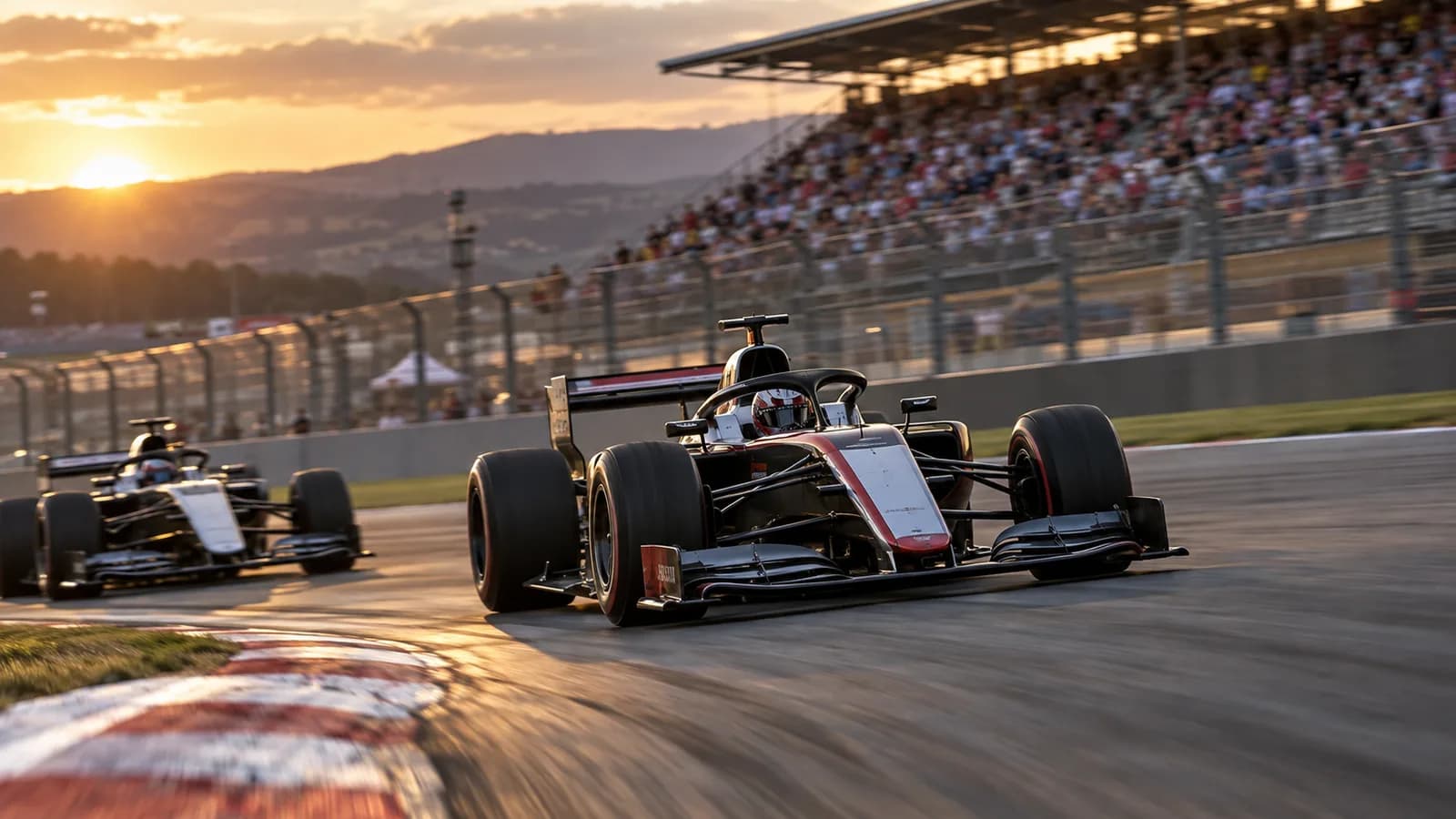
Motorsports tickets cover the loudest, fastest, and most logistically ambitious live events in sports, spanning Formula 1, NASCAR, IndyCar, IMSA sports car racing, MotoGP, and Formula E. Each series runs its own global or national calendar, but the live experience shares a common rhythm: a three-day race weekend built around practice sessions, qualifying, and a main race, often with support series, concerts, and fan zones folded in. Buyers are not just picking a seat; they are picking a weekend, a vantage point on a specific corner, and a tier of access that can range from open lawn seating to pit-lane walks and paddock club hospitality. Season structure varies sharply by series, with Formula 1 running roughly two dozen global rounds from spring through autumn, NASCAR stretching from the Daytona 500 in February through the Cup Series championship in November, IndyCar peaking around the Indianapolis 500 in late May, and MotoGP and Formula E weaving through their own international calendars. Fans buy motorsports tickets for several reasons that ticket strategy should respect. Some are chasing bucket-list events such as the Daytona 500, the Indianapolis 500, the United States Grand Prix at Circuit of The Americas, the Miami Grand Prix, or the Las Vegas Grand Prix, where the event itself is the destination. Others are loyalists to a driver, manufacturer, or series who follow a regional schedule and prioritize sightlines, shade, and access to the paddock. A growing share of buyers approach motorsports as a travel and hospitality decision, weighing suite packages, pit-side viewing, and multi-day grandstand seats against budget grandstand or general admission tickets. This umbrella hub maps how pricing, seating, and access work across the major motorsports series so fans can plan a weekend with confidence.
About Motorsports tickets
A motorsports ticket is rarely a single ninety-minute experience. Most race weekends unfold across three days, with practice on Friday, qualifying on Saturday, and the headline race on Sunday, plus support series, fan zone activations, and driver appearances scattered throughout. That structure changes how tickets are sold and how fans choose what to buy. Many circuits offer single-day grandstand tickets, three-day weekend passes that lock in the same seat across all sessions, and general admission options that allow ticket holders to roam between vantage points, especially at road courses and street circuits where unreserved hillside or trackside viewing is part of the tradition.
The live spectacle is also fundamentally different from stick-and-ball sports. At an oval such as Daytona International Speedway or the Indianapolis Motor Speedway, fans see most of the track from a single grandstand seat, with cars completing laps every few seconds. At road courses such as Circuit of The Americas, Watkins Glen International, or Road America, the action is spread across long, winding layouts where a single seat captures only one or two corners but offers richer detail, braking zones, and overtaking opportunities. Street circuits like the Miami Grand Prix layout and the Las Vegas Strip Circuit blend the two, with grandstands clustered around heavy braking zones and signature corners.
Beyond the racing, ticket value is shaped by atmosphere and access. Race weekends typically include driver autograph sessions, pit walks, support series such as IndyCar, IMSA, Indy NXT, NASCAR Xfinity, and various junior single-seater categories, plus concerts and family zones. For many fans, the appeal of a motorsports ticket is the multi-day festival quality, the chance to walk paddock perimeters, watch garages, and absorb the sound and scale of professional racing in a way no broadcast can replicate.
How Motorsports ticket prices work
Motorsports pricing is layered, and the biggest swings come from event tier, day of the weekend, and seating zone. Major destination events such as the Daytona 500, the Indianapolis 500, the Monaco-style street race in Miami, the Las Vegas Grand Prix, and the United States Grand Prix at Circuit of The Americas sit at the top of the pyramid, with sustained demand from international travelers, corporate buyers, and bucket-list fans. Regular-season NASCAR Cup races at intermediate ovals, mid-calendar IndyCar road and street rounds, and IMSA endurance events typically carry softer pricing, with more flexibility for last-minute buyers. MotoGP and Formula E rounds sit closer to the IndyCar and IMSA tier in most markets, with premium pricing concentrated in their flagship weekends.
Within a single weekend, prices also rise as the schedule progresses. Practice-only Friday tickets are usually the most affordable way through the gates, qualifying tickets carry a modest premium because the grid is on the line, and race day commands the highest face value. Three-day passes often deliver better per-session value than three separate single-day tickets, especially when a fan plans to attend the full weekend in the same reserved seat. General admission and lawn tickets at road courses tend to be the entry point, with reserved grandstand seats stepping up from there.
Venue type adds another layer. Purpose-built ovals price by sightline quality, with seats near the start-finish line and the most active corners commanding more than backstretch sections. Road courses price by corner, with seats overlooking heavy braking zones, hairpins, and chicanes generally costing more than seats along flat-out straights. Street circuits price by proximity to signature corners and pit-lane access. Across all venue types, hospitality, suite, and pit or paddock packages sit in their own premium tier, often sold directly by the circuit or series rather than as standard reserved seats.
Tactics for affordable Motorsports tickets
Affordable motorsports tickets are most often found by adjusting three variables: the event, the day, and the seat type. Choosing a regular-season NASCAR Cup race at an intermediate oval, a non-flagship IndyCar road or street round, an IMSA sprint weekend, or a domestic MotoGP or Formula E round will almost always cost less than a marquee Grand Prix or the Indianapolis 500. Fans who want to experience a series for the first time often get the best value by starting at one of these non-headline rounds, where grandstand and general admission inventory is wider and competition for seats is lighter.
Day-of-week strategy is the second lever. Friday practice tickets at most circuits are the cheapest way through the gates and often include access to support series, fan zones, and pit walks. Saturday qualifying tickets add the drama of grid-deciding sessions at a moderate premium. Fans who are flexible can build a satisfying weekend around Friday and Saturday only, leaving race day for television. At road and street courses, general admission tickets unlock a roaming experience that lets fans sample multiple corners across the weekend without paying for a reserved seat.
Timing and patience also matter. Single-day grandstand inventory for non-flagship rounds often loosens in the weeks leading up to the event as casual buyers finalize plans. For destination events such as the Las Vegas Grand Prix or the Miami Grand Prix, the opposite is often true, with the best value usually found earlier rather than later. Across all series, the team hubs on this site link directly to ticket pages for individual races, which makes it easier to compare seating zones and day options before committing to a full weekend package.
Best seats by venue type
At purpose-built ovals such as Daytona International Speedway, the Indianapolis Motor Speedway, and intermediate tracks across the NASCAR Cup schedule, the most coveted seats sit along the frontstretch near the start-finish line and the flag stand. These sections see every restart, every checkered flag, and the most pit-lane activity. Tower or upper-level seats above the start-finish line offer the best overall view of the racing surface and pit road, while lower seats place fans closer to the action but with a narrower field of view. Turn seats at ovals are often more affordable and place fans directly over the highest-speed corners.
At road courses such as Circuit of The Americas, Watkins Glen International, Road America, Mid-Ohio Sports Car Course, and Sonoma Raceway, the question shifts from frontstretch versus turn to which corner offers the best racing. Seats overlooking heavy braking zones, slow hairpins, and chicanes typically deliver the most on-track passing, while seats above signature corners such as the uphill turn one complex at Circuit of The Americas or the bus stop chicane at Watkins Glen offer iconic vantage points. Many road courses also sell general admission tickets that allow fans to move between corners across the weekend.
Street circuits such as the Miami Grand Prix layout, the Las Vegas Strip Circuit, and the temporary courses used by IndyCar in cities like Long Beach, Detroit, and Toronto reward seats near pit lane, the main straight, and signature braking zones. Sightlines on street courses can be tighter because of barriers and fencing, so grandstand seats elevated above the track usually deliver a better view than ground-level options. Across all venue types, fans should review official seating maps and any obstructed-view notes before purchasing, and the team hubs on this site link to event pages where these details are easier to compare.
Motorsports calendar and season structure
The motorsports calendar runs effectively year-round when viewed across series. Formula 1 typically opens in March and closes in late November or early December, with roughly two dozen global rounds. NASCAR opens with the Daytona 500 in February, runs the Cup Series through a regular season into late summer, then crowns its champion through a multi-round playoff that ends in November. IndyCar centers its season on the Indianapolis 500 in late May, with road, street, and oval rounds running from spring through late summer. IMSA runs a sports car schedule built around the Rolex 24 at Daytona in January and other endurance classics. MotoGP and Formula E follow their own international calendars with major rounds spread across multiple continents.
Within each series, certain weekends carry disproportionate weight. For NASCAR, the Daytona 500 opens the season and the playoff rounds close it, with marquee events such as the Coca-Cola 600 at Charlotte and the Brickyard event at Indianapolis Motor Speedway in between. For IndyCar, the Indianapolis 500 is the centerpiece, with the broader Month of May and the season-opening street race in Florida among the most attended weekends. For Formula 1, the United States Grand Prix, the Miami Grand Prix, and the Las Vegas Grand Prix anchor the North American calendar.
Fans planning travel should also account for support series and supporting weekends. Many NASCAR Cup weekends include Xfinity Series and Craftsman Truck Series races, IndyCar weekends include Indy NXT, IMSA weekends include multiple sports car classes racing simultaneously, and Formula 1 weekends include F2 and F3. These supporting programs can stretch a race weekend into a near-festival experience, which often justifies the cost of a three-day pass over a single race-day ticket.
How to buy Motorsports tickets safely
Safe ticket buying in motorsports starts with understanding what you are buying. A motorsports ticket can be a single-day grandstand seat, a three-day weekend pass, a general admission ticket, a club or suite package, or a hospitality and paddock package. Each tier comes with different inclusions, different access points, and different refund and resale rules. Before purchasing, fans should confirm which days and sessions a ticket covers, whether the seat is reserved or general admission, and whether the ticket includes any pit, paddock, or hospitality access.
Delivery and entry formats also matter. Many circuits have moved to mobile-only ticketing, with entry tied to a barcode in a digital wallet, while others still distribute hard-card credentials for premium and multi-day packages. Fans should make sure they understand how and when tickets will be delivered, especially when buying close to an event. International travelers attending events such as the Miami Grand Prix, the Las Vegas Grand Prix, or the United States Grand Prix should also plan for time-zone gaps in delivery timing.
The team hubs on this site link directly to ticket pages for individual races across the major motorsports series, which makes it easier to compare seating zones, day options, and package tiers in one place. Whenever possible, fans should review seating maps, look for any obstructed-view labels, and confirm the exact circuit configuration being used, since some venues run different layouts for different series. Buying through clearly identified ticket pages, reviewing the listed inclusions, and keeping confirmation emails accessible throughout the weekend are the simplest ways to reduce friction at the gate.
Marquee events and rivalries
Motorsports rivalries operate on two levels. The first is the rivalry between teams, manufacturers, and drivers within each series. NASCAR Cup racing has long been defined by manufacturer battles among the Detroit and Japanese carmakers, by deep team rivalries that stretch across generations, and by individual driver matchups that flare up at superspeedways and short tracks. IndyCar has its own rivalries between the dominant teams that contest the Indianapolis 500 each May. Formula 1 produces marquee constructor and driver battles that draw global audiences. IMSA, MotoGP, and Formula E each carry their own competitive stories.
The second level is the rivalry between marquee events themselves for fan attention and travel budgets. The Daytona 500 and the Indianapolis 500 are widely regarded as two of the most important single-day events in American motorsports, each with more than a century of combined heritage. The United States Grand Prix at Circuit of The Americas, the Miami Grand Prix, and the Las Vegas Grand Prix have established Formula 1 as a year-round North American story rather than a single-weekend stop. The Rolex 24 at Daytona stands at the top of the IMSA calendar, while the Coca-Cola 600 at Charlotte and the Brickyard event at Indianapolis Motor Speedway anchor the NASCAR summer.
For fans planning a single big trip, these marquee events are usually the right choice because they combine the strongest fields, the deepest support programs, and the most developed fan zones and hospitality offerings. Tickets to these events tend to be released earlier and sell deeper into their respective inventories than regular-season rounds. Fans tracking specific drivers or teams across a season often build their schedules around two or three of these anchor weekends, then fill in regional rounds based on travel convenience.
Cities where Motorsports is biggest
Motorsports has a few clear centers of gravity in the United States and a broader set of important cities across the global calendar. Daytona Beach is the historic capital of American stock car racing, anchored by Daytona International Speedway and the season-opening Daytona 500. Indianapolis is the home of the Indianapolis 500, the broader Month of May at the Indianapolis Motor Speedway, and a deep open-wheel heritage. Charlotte and the broader Carolinas region functions as the operational base for most of the NASCAR Cup paddock and hosts marquee weekends at Charlotte Motor Speedway.
Austin has become a year-round destination thanks to Circuit of The Americas, which hosts the United States Grand Prix, MotoGP, IndyCar, and IMSA rounds, making it one of the most diverse motorsports venues in the country. Miami and Las Vegas have emerged as flagship Formula 1 cities, with the Miami Grand Prix at Hard Rock Stadium and the Las Vegas Grand Prix on the Strip drawing global audiences. Long Beach hosts one of the oldest street races in North America, and Detroit has returned to street-circuit racing in its downtown. Sonoma, Watkins Glen, Road America in Elkhart Lake, and Mid-Ohio in Lexington round out the most important road-course destinations.
Beyond the United States, motorsports is biggest in cities with deep racing heritage and purpose-built circuits, including Montreal, Mexico City, Sao Paulo, Melbourne, Suzuka, and several European capitals that host Formula 1, MotoGP, and Formula E rounds. For fans planning travel, the team hubs on this site link to ticket pages for individual rounds, which makes it easier to align a trip with the specific city, circuit, and series a fan most wants to see.
First-time fan tips
First-time motorsports fans should plan for the practical realities of a race weekend before focusing on the seat. Major circuits sit outside city centers and draw huge crowds, which means parking, transit, and entry can each take significant time. Arriving early on race day, planning a transit or rideshare strategy in advance, and reviewing the circuit map before leaving home will make the experience far smoother. Sunscreen, hearing protection, and weather-appropriate clothing are essential at most venues, especially for endurance events and summer rounds.
Choosing the right ticket type is the second key decision. First-time fans at an oval often get the most complete experience from a frontstretch grandstand seat with a clear view of pit road and the start-finish line. First-time fans at a road course are often better served by general admission, which allows them to sample multiple corners across the weekend and find the vantage point they prefer. First-time fans at a street circuit should prioritize grandstand seats elevated above the barriers, since ground-level views can be tight. Three-day passes generally deliver more value than single-day race tickets for fans who want the full festival experience.
Finally, first-time fans should set expectations around the sensory scale of live motorsports. The sound, vibration, and speed of professional race cars and motorcycles are difficult to convey on television, and the first lap of a major race is often the most memorable moment of a fan's weekend. Pacing the day, taking advantage of fan zones and support series during practice and qualifying, and using the team hubs on this site to plan ticket purchases ahead of time all help first-time buyers turn a race weekend into a repeatable habit rather than a one-time trip.
Support